発酵食品における「微生物プロテオーム」の多様性と機能プロファイルの評価
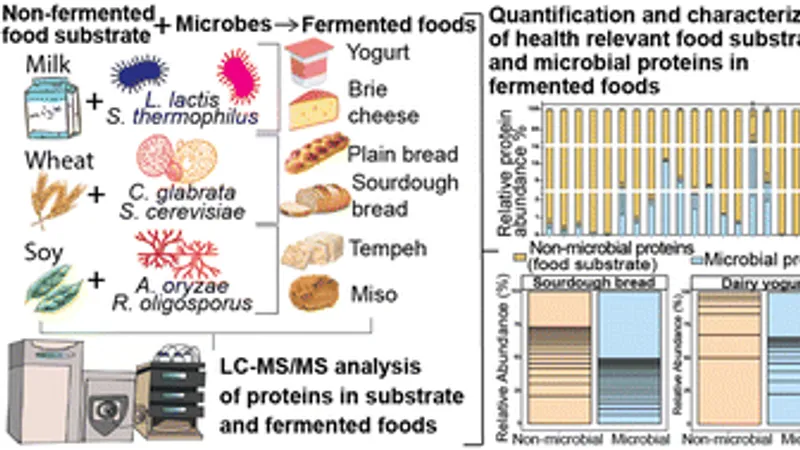 発酵食品の微生物プロテオーム
世界中で食卓を彩る発酵食品の健康効果は広く知られているが、微生物由来タンパク質の食料への寄与度は不明であった。
本研究ではメタプロテオミクスを用いて17種類の発酵食品のタンパク質を分析したところ、微生物タンパク質は総タンパク質の最大11%、同定タンパク質の最大60%を占めることが判明した。
これらの微生物タンパク質には、解糖酵素やシャペロンといった細胞の中核機能に関わるものと、炭水化物分解酵素やプロテアーゼなどの特殊機能を持つものが含まれる。
この結果は、微生物タンパク質が発酵食品の栄養的・機能的プロファイルに大きく貢献しており、腸内細菌叢との相互作用や健康アウトカムに重要な示唆を与えることを示している。
原文の冒頭を表示(英語・3段落のみ)
Abstract
Fermented foods are staples in diets worldwide and are known for their health benefits. Microorganisms are the key to fermented food production as they convert raw substrates into digestible, nutritious, and health-promoting products. While microbes are essential for fermented food production, their contribution to the dietary protein profile of the final food product in terms of microbial biomass is largely unknown. We analyzed proteins from 17 fermented foods using metaproteomics to identify and quantify microbial and food-derived proteins. We found that microbial proteins contribute up to 11% of the total protein content in fermented foods and comprise as much as 60% of the total number of identified proteins. These microbial proteins included many for central functions in microbial cells, such as glycolysis enzymes, translation machinery, and chaperones, as well as proteins for specialized functions that are important for the ecological niches in food fermentation, such as carbohydrate degrading enzymes and proteases. Some of these microbial proteins, such as proteases, could impact gut physiology. These findings highlight the substantial contribution of microbial proteins to the nutritional and functional profile of fermented foods, which may have important implications for interactions with the gut microbiota and health outcomes.
This article is part of the themed collection:
※ 著作権に配慮し、引用は冒頭3段落までです。続きは元記事をご覧ください。