インテル、過去の失敗が今も影響
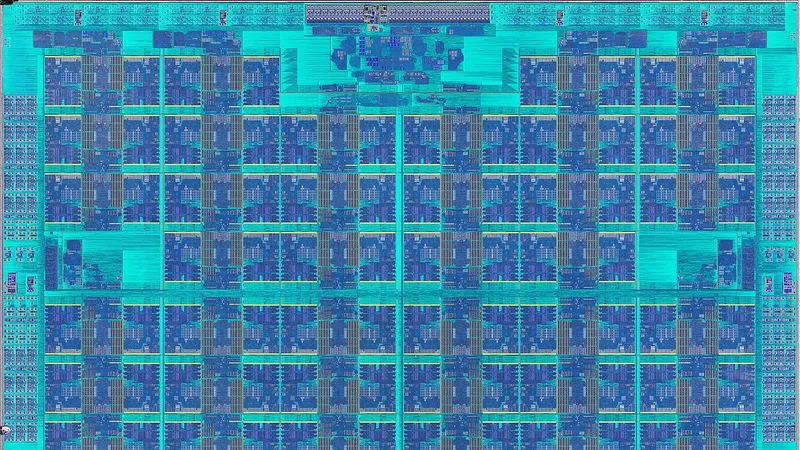 Larrabee遺産、インテ
新型プロセッサ「Panther Lake」の発表を受け、過去のプロジェクト「Larrabee」が再注目されています。
Larrabeeはx86ベースのGPU開発でしたが、競争力不足のため中止となり、その失敗がインテルのGPU戦略の遅れにつながりました。
元CEOのゲルスンガー氏の発言によると、Larrabeeが成功していればNvidiaの規模は小さかったかもしれないとのことですが、このプロジェクトの終焉は、インテルに大きな影響を与えたようです。
インテルが最新のモバイル向け設計「パンサーレイク」を発表した際、その機能(または機能の欠如)が注目を集めています。この出来事をきっかけに、半導体業界のベテラン編集者が、過去の失敗が長年にわたり企業に影響を与え続ける理由を、過去のプロジェクト「ラリーブ」を例に解説します。本記事では、ラリーブの失敗が、今日のインテルの状況にどのような影響を与えているのかを紐解きます。
ラリーブ計画とは?
ラリーブは、かつてのインテルCEOパット・ゲルシンガー氏が2010年に退任する直前に推進したプロジェクトとのことです。このプロジェクトは、インテルのx86 CPU設計をベースにしたグラフィックスアーキテクチャを構築するものでした。2026年現在から見ると、x86ベースのGPUがNvidiaの最新製品と競争できることは考えにくい、と評されています。ゲルシンガー氏は、ラリーブが成功していれば、Nvidiaの規模は現在の4分の1以下に抑えられたと発言しており、その影響は計り知れません。
ゲルシンガー氏の発言とラリーブの失敗
ゲルシンガー氏は、Computer History Museumへのインタビューで、ラリーブ計画がうまくいっていた場合、Nvidiaは現在の規模になり得なかったと語りました。しかし、ラリーブ自体は使用不能な大失敗であり、Nvidiaは既に2009年時点で圧倒的なリードを持っていました。また、ソフトウェアの専門知識や集中力という、インテルが苦戦してきた分野も必要でした。さらに、x86以外の分野で継続的な成功を収めてきた実績もありませんでした。これらの点を考慮すると、ゲルシンガー氏の発言には多くの条件付きが付きまとうのは当然でしょう。
ラリーブの影とインテルの課題
ラリーブの失敗は、その後のインテルの戦略に大きな影響を与えたとのことです。当時のCEOパット・ゲルシンガー氏の退任後も、ラリーブの失敗が影を落とし、過去15年以上にわたるインテルの衰退に繋がったという見方があります。インテルは、AMDの復活劇に見られるように、復活の可能性を秘めていますが、そのための文化的な課題を克服する必要があります。ゲルシンガー氏のリーダーシップが、インテルにとって不適切だったという意見も存在します。
まとめ
ラリーブ計画の失敗は、インテルが過去の過ちから学び、文化的な課題を克服していく必要性を示唆しています。今後のインテルの戦略が、過去の失敗をどのように克服し、再び輝きを取り戻すのか、注目されます。
原文の冒頭を表示(英語・3段落のみ)
Everyone is dunking on Intel (yet again) and I really didn’t want to join in … However, with the launch of Intel’s latest mobile design - known as Panther Lake - one feature (or rather lack of a feature) jumped out and had me retracing Intel’s history to understand how historic mistakes can continue to hinder a company for decades.Panther Lake has certain highly respected analysts quite excited.And Panther Lake is exciting on many fronts.Sadly, though, I won’t be joining the SemiAnalysis team, for reasons I’ll explain later.Our story - in this part free and part paid post - starts with Intel’s former CEO, Pat Gelsinger:ShareSoon after Pat Gelsinger’s second departure from Intel, Bryan Cantrill on the Oxide podcast highlighted a section of Gelsinger’s Oral History, given to the Computer History Museum in 2019. Gelsinger discusses a project that he’d backed at Intel shortly before leaving for the first time in 2010.In a nearly four hour long interview, Gelsinger makes a strong claim about one particular Intel project:We were in the right space, and had Intel stayed with it the world of machine learning, AI, Nvidia would be a fourth the size they are today as a company …For context, the interview was given in March 2019, whilst Gelsinger was still CEO of VMWare and Nvidia had a (stock split adjusted) share price of less than $5 (compared to more than $180 at the time of writing this post) and a market cap of around $100bn (compared to more than $4.5 trillion today).The name of that Intel project? Larrabee.In the podcast Cantrill has a strong reaction to Gelsinger’s claims.I was washing the dishes as I was listening to this, and it stopped me in my tracks: I turned off the faucet, dried my hands, and backed up the recording. Had I heard correctly?!The reason for this response?If one wanted to make this eyewatering claim, it must be loaded with riders and caveats: it must acknowledge that Larrabee itself was an unusable disaster; that NVIDIA had an indisputable lead, even in 2009; that for Intel to dominate NVIDIA it would have required conjuring software expertise and focus with which Intel has famously struggled; that Intel had no pattern for sustained success out of x86.Cantrill was not impressed!On the one hand, there were enough qualifiers from Gelsinger to soften this claim a little (and at least some passing respect for NVIDIA’s Jenson Huang and Bill Dally), but on the other… yes, he actually claimed that NVIDIA had his departure from Intel to thank for (checks transcript) three quarters of its size.And Cantrill wasn’t the only one to be surprised by these claims:I think even the interviewers were a little taken aback, and asked the question directly: “Do you think that it was in part that you weren’t there to drive [Larrabee] forward that they decided to withdraw from that?” Gelsinger’s response: “Yeah, I’ll say that very directly.”Here is the video of the Oral History if you want to hear Gelsinger himself:Cantrill then goes on to use this as part of his case that, as the title of a blog post makes clear Gelsinger was wrong for Intel.I have great reverence for Intel and its extraordinary history, and I would never count them out (the resurrection of a clinically-dead AMD shows what is possible!), but I also won’t be integrating with any of their technology until their acute cultural issues are addressed. With regard to these cultural issues (and his other strengths aside), Pat Gelsinger was indisputably wrong for Intel.The world has moved on since Gelsinger’s departure and in Lip-Bu Tan has a very different leader, but it turns out that Larabee arguably casts a long shadow over Intel’s history and decline over the last decade and a half.ShareBut what was Larabee? In short, it was an attempt to build a graphics architecture based on Intel’s x86 CPU designs.From the perspective of 2026, Larabee sounds a little bit, well, mad. Surely a GPU based on x86 was never going to be able to compete with the latest offerings from Nvidia and others? x86 famously has lots of baggage and competing with the latest dedicated GPU offerings from Nvidia and AMD would give Intel a mountain to climb.I’ve written before about how x86 has turned from a ‘moat’ to a ‘prison’ for Intel.And so it turned out: Larabee proved to be uncompetitive. Its development got as far as creating a (still working) prototype which made it into the wild and is now a collectors item:In order to be even remotely competitive though Larabee needed to add some new instructions, known as Larabee New Instructions (LRBni), to x86. LRBni added new 512-bit vector instructions as this post from Michael Abrash, who was central to their development, sets out:LRBni adds two sorts of registers to the x86 architectural state. There are 32 new 512-bit vector registers, v0-v31, and 8 new 16-bit vector mask registers, k0-k7. … LRBni vector instructions are either 16-wide or 8-wide, so a vector register can be operated on by a single LRBni instruction as 16 float32s, 16 int32s, 8 float64s, or 8 int64s … with all elements operated on in parallel.LRBni vector instructions are also ternary; that is, they involve three vector registers, of which typically two are inputs and the third the output. This eliminates the need for most move instructions; such instructions are not a significant burden on out-of-order cores, which can schedule them in parallel with other work, but they would slow Larrabee's in-order pipeline considerably.Leaving aside whether an x86 based GPU was a good idea in the first place, the project itself has been widely recognised as a disaster. This post from 2009 lays out lots of the gory detail:… as the time went by, we received bits and pieces with more worrying content. Back in 2007, when Larrabee started to take physical shape, we heard some very worrying statements coming from the people that were coming and going from the team. Most worrisome was the issue with the memory controller – “people involved in designing high performance memory controllers don’t even understand the basic concepts of pipelining and they don’t understand how to read a memory spec. It is completely ridiculous.”With a 2009 assessment of how much Larabee costThe real question of did AMD overpay for ATI Technologies Inc. can only be concluded once that the cost of Intel building Larrabee on its own becomes a matter of public knowledge. Over the past few years, we heard several different calculations with almost each and every one being well over a billion dollars. Worst case that we heard was “we burned through three billion USD”, but that belongs in the speculation category. Do bear in mind that the figures aren’t coming from the bean counters and that the cost of slippage cannot be calculated yet.The Larabee project was finally brought to an end in May 2010.For balance here is a more positive assessment from a member of the Larabee team that focuses on the objectives of the project:… Larrabee was never primarily a graphics card. If Intel had wanted a kick-ass graphics card, they already had a very good graphics team begging to be allowed to build a nice big fat hot discrete GPU - and the Gen architecture is such that they'd build a great one, too. But Intel management didn't want one, and still doesn't. But if we were going to build Larrabee anyway, they wanted us to cover that market as well.But killing products has consequences. Intel really needed a discrete GPU to compete with Nvidia and AMD. The end of Larabee meant it was left without one.And with the benefit of hindsight, the failure was even more damaging than was realised at the time. Intel had no competitive GPU that could participate in AI boom of the 2020s.And the impact of Larabee’s failure is arguably even more far reaching with consequences that are still affecting Intel today.
※ 著作権に配慮し、引用は冒頭3段落までです。続きは元記事をご覧ください。