プルリクエストの書き方とレビューのコツ
 PRの質を高める
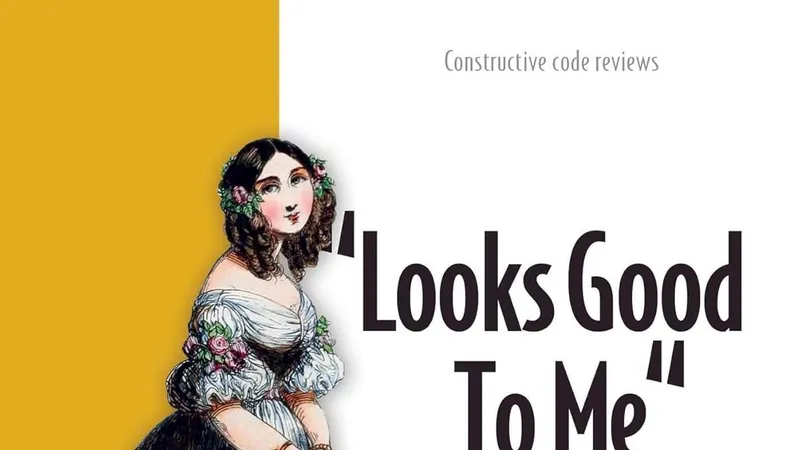
コードレビュー本「Looks Good To Me」の2章と6章から、プルリクエストの書き方とレビューコメントの書き方の実用的なコツを解説。
プルリクエストはコミュニケーションの単位として捉え、タイトルと説明で変更内容と理由を明確に伝えることが重要。
コメントは具体的に、客観的に、そして相手への配慮を忘れずに記述することで、レビューの効率と品質が向上する。
ソフトウェア開発において不可欠な「コードレビュー」。しかし、そのプロセスが非効率的で、開発者の間で摩擦を生むケースも少なくありません。今回、コードレビューのベストプラクティスを解説した書籍の内容を基に、PR(プルリクエスト)の作成方法とレビューコメントの書き方について、具体的な改善策を解説します。
PRは「コード」ではなく「コミュニケーション」の単位
プルリクエスト(PR)を単なるコードの塊として捉えるのではなく、「コミュニケーションの単位」として設計することが重要だそうです。レビューアはあなたの「聴衆」であり、彼らの作業をいかに楽にするかが開発者の責務となります。PRのタイトルで「何が変わったか」を、説明文で「なぜ変わったか」を明確に伝えることで、レビュー時のやり取りの半分以上を削減できるとされています。
具体的には、タイトルは「fix: CSV export issue (DEV-2451)」のように、コミットの慣習(fix:、feat:など)を使い、具体的かつ短く記述することが推奨されています。また、説明文には変更の背景(Context)、関連するチケットや設計書へのリンク、検討したが採用しなかった代替案などを盛り込むべきとのことです。これにより、レビューアがSlackなどで質問を探し回る必要がなくなります。
レビューアと作成者の三者間の契約
コードレビューは、作成者、レビューア、そしてチームという三者間の契約であると捉えるべきだそうです。作成者側は、誰かに依頼する前に自分でコードを読み返し、PRを「アトミック(単一の機能単位)」に保つことが求められます。理想的には、レビュー時間が10〜20分で収まるよう、500行以下、20ファイル程度に抑えるべきとのことです。
レビューア側は、単に「OK」と承認するのではなく、コードを深く理解し、承認は「所有権の共有」を意味すると認識することが重要です。もし理解できない点があるのに「信頼しているから」と承認してしまっては、それは問題であると指摘されています。チームとしては、ホットフィックスのような例外的なプロセスを明確に文書化し、透明性を保つ必要があるとのことです。
建設的なレビューコメントの書き方
PRのタイトルや説明が完璧でも、レビューコメントが曖昧であったり、批判的であったりすると、レビュー自体が辛いものになってしまいます。コメントを書く際は、人格ではなく「コード」について客観的に議論し、「私」や「あなた」ではなく「私たち」という視点を持つべきだそうです。
また、指示ではなく「〜できませんか?」といった問いかけの形を取ることで、作成者を防御的な立場に追い込むことを避けることができます。さらに、コメントには「何を変えるか(Request)」「なぜ変えるか(Rationale)」「どのような結果になるか(Result)」という構造を持たせることで、建設的で具体的なフィードバックが可能になると解説されています。
まとめ
コードレビューは、単なる品質チェックではなく、チーム全体のコミュニケーションを円滑にするための重要なプロセスです。PR作成時の情報設計と、レビュー時の建設的な対話スキルを磨くことで、開発効率とチームの生産性を大きく向上させることができるでしょう。
原文の冒頭を表示(英語・3段落のみ)
A few weeks ago, I picked up Looks Good To Me by Adrienne Braganza (Manning, December 2024). It is 352 pages on code reviews. Most of it confirms things you probably already feel, but two chapters stayed with me long enough to write about: Chapter 2 on what a pull request should look like, and Chapter 6 on how to write review comments.What follows is the practical version of those two chapters. One engineer can adopt all of it on the next PR, without a team meeting first.The most useful framing I took from Chapter 2 is this: a pull request is a unit of communication, not a unit of code. The reviewer is your audience. Your job is to make their job cheap.A PR has two jobs:The title tells the reviewer what changed.The description tells the reviewer why it changed.Get those two right and you eliminate roughly half the back-and-forth in a typical review.A few rules:It must be self-explanatory without opening the PR.A linked ticket is not a title.Use a conventional-commit prefix (fix:, feat:, chore:) so the reviewer’s mindset is set before they click.Keep it under 80 characters.Take a real example. Watch the same title get better:csv export brokenCould be anything.fix DEV-2451A ticket reference is not a title.fix CSV export issue (DEV-2451)Generic, and the ticket belongs in the description anyway.fix: CSV export returns empty file because the date filter excludes records on the start day due to a strict inequalityOn the right track, but breaks the 80-char rule.fix: strict date filter drops records on CSV export start dayPrefix, specific, fits.If a teammate scrolls past your PR in a list, the title alone should tell them whether it concerns them. That is the bar.The description should answer the questions the reviewer is about to ask. That means:Context. Why does this change exist?Links. Ticket, design doc, related Slack thread.Abandoned alternatives. If you considered another approach and rejected it, say so. It saves a round trip.How to test, especially if the change is not trivially exercised by automated tests.A good description is one where the reviewer never has to find you on Slack to understand the change. Write it for the version of your colleague who has none of your context, because that version is real and is probably reviewing your PR.Code review is a three-party contract:The author. Be your own first reviewer. Re-read the diff before you assign anyone. Keep the PR atomic, reviewable in 10 to 20 minutes, ideally under 500 lines and 20 files. The number of times I have read a 1,500-line PR and rubber-stamped it because I gave up is greater than zero, and I am not the only one.The reviewer. You must actually understand the code, not just nod at it. Approving means you share ownership. If something does not make sense and the explanation is “I trust them,” do not approve. Ask.The team. Document explicitly when the process can be skipped. Hotfixes are real. Pretending they aren’t real produces shadow processes, which are worse than documented exceptions.Braganza puts it neatly:Code reviews are like turning signals: optional, but they reduce crashes.So far, so good. Now the second half.A PR with a great title and description can still produce a miserable review if the comments are dismissive, ambiguous, or vague. Chapter 6 is the toolkit.Be objective. Talk about the code, not the person. Think in “we”, not “I” or “you”. Before you post the comment, ask yourself why you want to make this suggestion. If the answer is “because I would have written it differently,” reconsider.Watch your language. Ask, do not command. “Can we” instead of “you should.” This is not about being precious. It is about not putting the author on the defensive in a forum where everyone on the team can read along.Add context. Every non-trivial comment should explain why the change matters. “Because that is how we do it” is not a reason. “Because we agreed to migrate everything off v2 by Q3, link” is.Be specific. The author should never have to guess whether your comment is blocking or a stylistic preference. That is what comment signals are for.A small vocabulary that costs nothing to adopt:needs change. Blocking, small change.needs rework. Blocking, large change. Maybe discuss offline.nitpick. Non-blocking, style or preference.levelup. Non-blocking suggestion for improvement.A codified version of this idea lives at conventionalcomments.org. Whether you adopt that exact spec or not, having any agreed vocabulary in front of your comments removes a class of misunderstanding entirely.Structure every non-trivial review comment as:Request. One sentence on the what.Rationale. One or two sentences on the why.Result. A measurable end state the author can compare against.Take a comment I might leave on a batch job:needs change: Can we wrap this database call in our withRetry helper? The direct call will fail the whole job if Postgres has a transient hiccup, which we have already seen twice this quarter (link). Our other batch jobs use withRetry for the same reason; adding it here keeps retry behaviour consistent across the codebase.The signal is up front, so the author knows it is blocking. The request is phrased as a question. The rationale gives a concrete, link-backed reason. The result is verifiable: the call uses withRetry and matches the rest of the batch jobs.The same suggestion, evolving from worst to best:You should not hard-code 86400 here.Direct command. “You” puts the author on the defensive. No reason given.We should not hard-code 86400 here.Shared ownership. Tiny change, real difference.Can we avoid hard-coding 86400 here?A question invites discussion instead of demanding compliance.needs change: Can we avoid hard-coding 86400 here?Now the author knows it is blocking, not a nit.needs change: Can we replace 86400 with a SECONDS_PER_DAY constant in time.kt? The same value is already hard-coded in two other files (links), and a named constant makes the intent obvious without needing a comment.Specific suggestion and reason included. The author knows what to change, why, and how to verify.Each step costs the reviewer maybe ten extra seconds. It saves the author a back-and-forth. Run that math across a year of reviews and the difference is enormous.If you only take a few things away, take these:Title is the what, description is the why. 80 characters, prefix, no naked ticket numbers.Be your own first reviewer before you assign anyone.Approving means you understood it. If you didn’t, ask.Comments: think “we”, ask instead of command, add context, signal whether you are blocking.For anything non-trivial, write Request, Rationale, Result.None of this requires team alignment. None of it requires a process rollout. It is one engineer changing how they write a title, a description, and a comment. The compounding effect is what surprised me.That said, Looks Good To Me has more in it. A chapter on team working agreements, an emergency playbook for when production is on fire and the review process is in the way, and an honest chapter on AI in reviews. If your team gets value out of these two chapters, the rest is worth the read. But you do not have to start there. Start with the next PR you open.If your team has worked something like this out, I would love to hear how it landed in practice. Thanks for reading. 😊
※ 著作権に配慮し、引用は冒頭3段落までです。続きは元記事をご覧ください。