バッテリー交換の体験と電動二輪車の課題
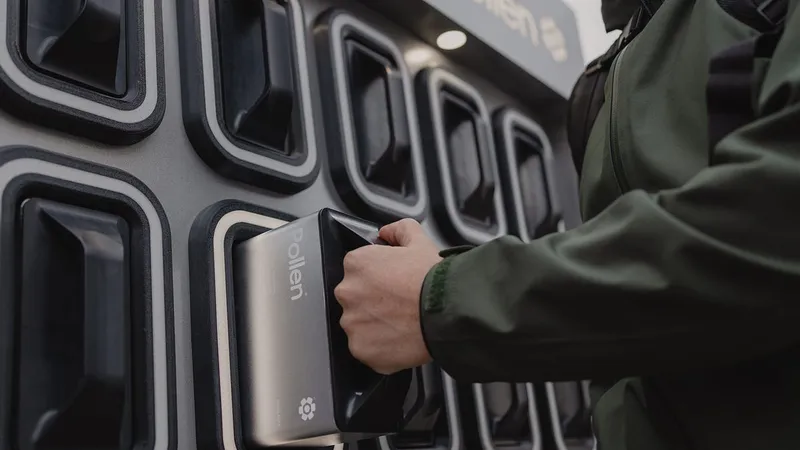 バッテリー交換で未来を拓く
筆者はバッテリー交換の容易さに感動し、電動二輪車の普及の遅れに気づく。
既存のバッテリーの規格がメーカーごとに異なり、充電時間が長く、普及を妨げている。
そこで、あらゆる電動二輪車に対応可能な「Pollenバッテリー」を開発。
リスボンで試験導入し、配送業者からの好評を得ている。
都市部の電動化には、バッテリー規格の統一が不可欠だ。
都市の脱炭素化を加速させる新たなソリューションとして、バッテリー交換(バッテリースワッピング)技術が注目を集めている。この技術は、電気二輪車(モペットなど)の充電にかかる長い時間を数秒で短縮することで、利用者の利便性を劇的に向上させる。この技術を開発したPollen社が、ヨーロッパの都市でサービス展開を開始した模様だ。
二輪車の電化が進まない背景
現在、EUでは自動車や市バスは電動化が進んでいるものの、電動バイクやモペットといった二輪車分野は遅れをとっている。従来のガソリンモペットと比較すると、電動モペットは価格が高く、航続距離が短いため、充電に数時間かかるという大きな欠点がある。特に、仕事で利用するライダーにとっては、数時間の充電は「仕事が一日失われる」ほどの大きな不便さにつながるという指摘だ。
バッテリー交換の課題と解決策
この問題の根本的な原因は、市場の「断片化(フラグメンテーション)」にあると分析されている。現在、モペットメーカーごとに独自のバッテリー規格(サイズ、電圧、コネクタ、通信プロトコルなど)が採用されているため、互換性が全くないのだ。これは、自動車が各メーカー専用の給油所を利用せざるを得ない状況と似ているという。
Pollenの革新的なバッテリー技術
この断片化を解消するため、Pollen社は「どんなバイクにも対応できる単一バッテリー」の開発に注力した。同社が開発したPollenバッテリーは、電子的に自己再構成する機能を持っている。これにより、バッテリーが車両の規格に合わせて電圧や通信方法を自動的に調整し、互換性の問題を解消している。
欧州市場への展開と展望
Pollen社は今年3月、ポルトガルのリスボンで最初の公共交換ステーションを稼働させた。当初は食品や荷物の配送業者(デリバリーフリート)を対象に導入を開始している。同社は、二輪車による都市の電動化は避けられないと確信しており、このバッテリーが「どのバイクに乗っていても使える」という利点を武器に、今後も欧州の都市展開を加速させていく方針だ。
まとめ
Pollen社の技術は、二輪車の電動化における最大のボトルネックを解消し、利用者の利便性を高める可能性を秘めている。都市交通における環境負荷低減の鍵として、今後の普及が注目されるだろう。
原文の冒頭を表示(英語・3段落のみ)
3 min readJust now--Press enter or click to view image in full sizeTwo months ago, I swapped a Pollen battery for the first time in the field, at our first station. Depleted battery went in, charged battery came out, and it only took a few seconds.The simplicity of it took me back fourteen years. It was a sunny afternoon in London, back in 2012, and I was trying Uber for the first time. I pulled out my shiny iPhone 5, fired up the app, pushed a button, watched a car move toward me like in a videogame, and looked up to see it come to life at the curb.The magic was in the simplicity of it. And that’s what I felt at the swapping station.For the past 12 years, I’ve been working with technology that moves people and cities. First Uber, in Portugal and Southern Europe. Then Kitch, the company I co-founded and ran until it was acquired. Somewhere along the way, it became obvious to me that whatever I did next had to put a dent in climate change. Especially since road transport is roughly a quarter of GHG emissions in the EU, and the main cause of air pollution in European cities.In 2025, 60% of cars sold in the EU were electric or hybrid, and 60% of city buses deployed were zero-emission. By contrast, 6% of motorcycles and mopeds sold were electric. The picture is stark: cars and buses are electrifying, motorcycles got left behind. Loud, dirty and surprisingly polluting: a typical petrol moped emits more hydrocarbons and NOx per kilometer than the family petrol car next to it at the traffic light.And cities won’t electrify until two-wheelers do.So, why haven’t they?Today, electric mopeds cost more because of their batteries. They have shorter ranges than petrol ones, and when they stop to recharge, it takes them several hours to get back on the road.Who wants a motorbike that costs more and stays off the road for hours every day? And if this is an inconvenience for a commuter, it’s a non-starter for anyone who rides for a living. Six hours plugged into a wall is not a headache. It’s a lost day of work.Battery swapping should be the obvious answer: seconds to swap instead of hours to charge. It works at scale, with millions of swaps every day in Taiwan, China and India. But why has it stalled everywhere else?The answer is: fragmentation. Every moped manufacturer uses their own battery, sometimes a different battery per model. Different sizes, different formats, different voltages, different connectors, different communications protocols. A few ultra-high-density Asian markets got this to work through vertical, walled-garden networks: one battery and one network per OEM. But once you leave the few cities with incredibly high moped concentration, it doesn’t work.Imagine if Volkswagens could only refuel at Volkswagen stations, and Toyotas at Toyota stations. That’s the world electric two-wheelers live in today.So we asked a different question: what if a single battery could power any motorbike and moped?That’s what we spent the last eighteen months building. A battery that electronically reconfigures itself — its voltage, the way it talks to the bike — to match any vehicle. The bike doesn’t adapt to the battery. The battery adapts to the bike.We call it the Pollen battery. It’s lightweight, compact, and compatible with most electric mopeds on European roads today.In March, we quietly went live in Lisbon. We deployed our first three public stations, and started helping delivery fleets (packages, food, groceries) switch from petrol to electric. They got it immediately: there’s no learning curve to swapping in seconds.We’re a long way from done. The next few months are more of the same: a team in Lisbon, heads down, deploying more batteries and stations, continuously improving our product and user experience. Then, new cities.Our bet is simple: cities are going to electrify on two wheels. They just need a battery that doesn’t care which bike you ride.This post was handwritten mostly listening to Tougher Than the Rest by Nation of Language (covering The Boss).
※ 著作権に配慮し、引用は冒頭3段落までです。続きは元記事をご覧ください。