新云平台采用完全同态加密技术
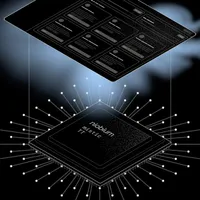
Niobium 公司推出了一款名为“Fog”的全新加密云平台,它利用完全同态加密 (FHE) 技术,允许在数据不被解密的情况下进行计算。
用户可以使用私钥在本地加密数据或工作负载,并将加密后的数据部署到 Fog 平台,而无需共享密钥。
Fog 平台采用 FPGA 芯片 (Mistic) 加速 FHE 计算,使其速度比现有 GPU 快两倍。
目前提供私有测试版,预计五月或六月公开发布,旨在解决云数据安全和隐私问题,并允许组织安全地处理敏感数据。
查看原文开头(英文 · 仅前 3 段)
Most cloud computing services encrypt data in transit and at rest. But that data still needs to be decrypted before cloud servers or virtual machines can perform any kind of computation on it. This risks exposing data—especially sensitive information such as financial transactions or medical records—during processing. This is where the Fog comes in.Launched in early April by chip startup Niobium, the Fog is an encrypted cloud platform. It follows a client-server architecture, where a person or organization (the client) can encrypt data or workloads locally using their own private keys and deploy the encrypted data or workloads to the Fog (the server) without sharing their keys. These private keys remain with data owners, and only they can decrypt any results from the platform.Much as actual fog obscures everything it envelops, so does the encrypted cloud platform named after it. Yet unlike physical fog that eventually lifts, the Fog keeps data opaque at all times—even as computation happens.“The data in our cloud will never be exposed—it’s always encrypted,” says John Barrus, vice president of product at Niobium. “It’s a new category of cloud.”Fully Homomorphic Encryption keeps the Fog secureBeneath the Fog lies a cryptographic technique known as fully homomorphic encryption, or FHE, which allows for computing on encrypted data without the need to decrypt it. But FHE is often slow and requires a lot of computing power and memory. Niobium aims to address these bottlenecks using Mistic, its FPGA (field-programmable gate array) chip, which can be reconfigured for FHE after manufacturing. For some applications the company is testing, its accelerator hardware runs FHE about twice as fast as today’s GPUs, Barrus says.To demonstrate the usability of its encrypted cloud platform, Niobium has developed a handful of template applications “that solve typical problems where you might want to hide the data or keep it encrypted, so people can start there and just try it out,” says Barrus. One such template application involves encrypted semantic search, which queries databases or datasets and returns relevant results based on the context or meaning of the search terms rather than keywords that match them. Both the query and the data source are encrypted, helping ensure data privacy.“Let’s say you’re a legal firm, and you have sensitive case documents. You encrypt all those documents and store them encrypted in the cloud,” Barrus says. In this scenario, you can ask questions about the documents using encrypted semantic search “and get pointers to those documents back, and then just download and decrypt the documents you need.”Niobium takes FHE from theory to practiceKurt Rohloff, cofounder and CTO at Duality Technologies, is excited about the prospect of running his company’s privacy-enhancing software products on the Fog. Duality provides software that uses FHE, including an LLM inference framework. Without a platform like the Fog, users may need to purchase dedicated FHE acceleration hardware, he says. But “the Niobium encrypted cloud platform allows users to rapidly scale their use of FHE-protected computing [and] get much more value from their data,” he says.Echoing the sentiment is Rashmi Agrawal, cofounder and CTO at CipherSonic Labs, a company building FHE-powered encrypted AI infrastructure. “Platforms like Niobium are important because they help move FHE from theory into deployable infrastructure,” she says. “An encrypted cloud platform built on FHE fundamentally changes the trust model of cloud computing. This significantly reduces exposure to data leakage, insider threats, and compliance risks while enabling organizations to safely process highly sensitive data in the cloud.”However, Agrawal points out that despite FHE’s rapid progress, there are still practical challenges. These include performance overheads for complex tasks or workloads that need to be completed with low latency, as well as filling in skills gaps for software developers who have no FHE knowledge or experience. “Building FHE-compatible applications often requires rethinking traditional approaches. The ecosystem is still maturing as tooling, standards, and interoperability continue to evolve,” she adds.Barrus acknowledges these hurdles. “I think the real challenge is large language models with a lot of matrix and vector multiplications. We have to be fast enough that you’re not waiting minutes for every token but seconds or so. That’s going to be much harder to solve,” he says.In terms of equipping developers without any FHE background, Niobium hopes to make the Fog more accessible by providing a tech stack composed of a compiler, software development kit, documentation, and other training materials. “If we can bring FHE computation to more people, then more people can develop privacy-preserving applications,” says Barrus.The Fog is currently available in private beta, with Niobium targeting May or June for a public launch. The company is also developing an application-specific integrated circuit for its encrypted cloud platform that Barrus says will be up to 25 times as fast as a GPU, depending on the application.“What we’re trying to do is create value from encrypted data,” he says. “Our vision is that data never has to be exposed to be useful.”
※ 出于版权考虑,仅引用前 3 段。完整内容请阅读原文。