为了拯救非洲野生动物,猎手们真的能做到吗?
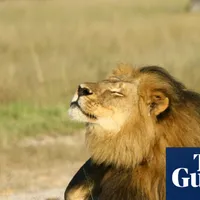
文章讲述了在莫桑比克尼亚萨特别保护区进行的狩猎活动,并探讨了狩猎与野生动物保护之间的复杂关系。
一些专业狩猎公司通过出售狩猎许可证,直接资助非洲的保护项目,例如,一位美国神经外科医生曾花费35万美元猎杀一头濒危黑犀牛,用于支持保护项目。
尽管这种做法备受争议,但文章指出,许多非洲地区的保护地最初都是为了满足猎人的需求而设立的。
如今,一些保护区与狩猎区相邻,动物的命运也因此变得微妙,狩猎活动在一定程度上为野生动物保护提供了资金支持,却也与动物的生存形成了矛盾。
查看原文开头(英文 · 仅前 3 段)
You can kill almost anything if you’re willing to pay. Big or small. Land, water or air. Ten a penny or one of the last of its kind. There’s nearly always a way, though it might not make you popular. The Niassa special reserve, a vast reservation larger than Switzerland, stretches for 190 miles along the northern rim of Mozambique, taking in 4.2m hectares of woodland and rivers. The reserve, one of the world’s largest protected areas, is home to elephants, leopards, hyenas, zebras and about 1,000 wild lions.That word, however: protected. It applies to some, but not all, of its animal inhabitants. Each year, a specific number are set aside for sacrifice, for the greater good. Not long ago, I joined an expedition in Niassa, with one of Africa’s top game-hunting companies.Safari guide Paul Stones and his client, an American neurosurgeon in his early 70s, were preparing to shoot a cape buffalo with the expert assistance of two professional trackers: Mozambicans Sabite Mohamed and Tino Salvador.It took the trackers mere moments to find the first prints. The trail led us through the labyrinth of green and bronze. We passed along dusty, thorn-tangled riverbeds, then damper, cooler corridors of leaves set buzzing by tiny insects. The whole time we moved in silence.Suddenly, there was a movement in the tall golden grasses close at hand − something large, moving fast. Stones and his client swung their guns sharply towards the source of the noise. The trackers melted into the trees. A waterbuck burst from the grass, flinging vegetation aside like a curtain. It leapt, balletic, into the air, before departing stage left at a flat gallop. In the stunned pause afterwards I gulped with silent laughter, more from release of tension than comic effect.We walked on.Every year, clients of the trophy-hunting industry claim the lives of tens of thousands of wild animals across the world. In sub-Saharan Africa, where hunting interests control vast swathes of the wildest land, trophy hunters often directly subsidise conservation projects on the grandest scale. In 2014, the Texas oil heir Corey Knowlton is reported to have paid $350,000 for the pleasure of killing a critically endangered black rhino in Namibia. He made the winning bid at an auction aimed at raising funds for African conservation run by the Dallas Safari Club. Afterwards, Knowlton told the media that he had received death threats but that he made his kill with a clear conscience: “I felt like from day one it was benefiting the black rhino.” Conservation efforts, he said, were expensive; it took money to keep them alive. “I’m absolutely hell-bent on protecting this animal.” He said less about what motivated him to kill one.Professional hunters and trackers die too, in the pursuit of dangerous animals every year. Stones and his client voice reverence for what they call “fair chase”: an ethical distinction observed in certain sporting circles in which the quarry is felt to have a sporting chance of survival. Wild animals, moving freely through their natural habitat, are the platonic ideal. At the other end of the spectrum is the “canned hunting” industry in which animals, particularly lions, are bred for the kill, and held captive in fenced enclosures.From this point of view, the larger and wilder the enclosure, and the freer the movement of the animal, the better. And Niassa is one of the very biggest and wildest game reserves in the world. Day after day, for 10 days, Stones and his client rose before dawn, dressed themselves in clothes of a drab dry-leaf green and set out on the trail. By the time the sun was high in the sky and the gunmen were soaked in sweat, there arose – in their minds, at least – a sense of parity, of worthy opposition, equal opportunity in this game of life and death, even if only one party has chosen to play.In a sense, the hunters are part of an ancient tradition of sport hunting that stretches back thousands of years: generations of emperors, kings, aristocracy, later merchants and other newly monied classes, all of whom have sought to prove themselves, satisfy primal urges, test their mettle or find spiritual fulfilment in the act of hunting. Perhaps perversely, hunting cultures have been forced to carefully conserve their wildlife: allowing animal numbers to rebound enables future massacres.Many of the best and longest-preserved regions around the world were first brought under environmental protection for the enjoyment of a bloodthirsty elite. The Białowieża forest, for example, often celebrated as one of Europe’s last unspoiled “primeval” woodlands, was set aside as a hunting park for Polish kings in the 15th century.In medieval Europe such reserves were known as “forests”, whether or not they were wooded, and were governed under the separate code of “forest law”. These were privileged, private domains closed to scrutiny and far from prying eyes. Sometimes they were sites of discreet deal-making and diplomacy. What happened in the forest, in other words, stayed in the forest.Tourist view a group of cheetahs in the Maasai Mara national reserve in Kenya. Photograph: VW Pics/Universal Images Group/Getty ImagesThe creation of hunting preserves had the secondary outcome of conserving large tracts of wild or wild-like habitat. “If we understand conservation as conscious short-term restraint for long-term benefit,” the historian Thomas Allsen has argued, “then many of the most active conservationists in history were political elites, the royal hunters and the polities they controlled.”After disastrous collapses in African animal populations under colonial rule, European imperial powers imposed the only model of wildlife preservation they knew: a patchwork of private hunting preserves, implanting feudal principles into a new context. Since 1900, about 1.4m sq km of sub-Saharan Africa have been set aside for trophy hunting. Many of Africa’s best-known wilderness areas and national parks were initially protected for the benefit of hunters. South Africa’s beloved Kruger national park began life as the Sabi and Singwitzi game reserves, and though hunting within the park is now banned, even today it shares unfenced boundaries with trophy-hunting estates, so that the same animals, safeguarded one minute, may pass over an invisible line and become fair game the next.Big-game hunters were the originators of the international conservation movement and continue to finance, to a surprising extent, wilderness preservation in Africa and North America. But they built it based on a central contradiction: that one might save wildlife by killing it.Trophy hunting, especially of rare or endangered species, is a highly emotive and divisive issue, and there have been many attempts to ban it. But so closely entangled is it with African conservation, it’s not clear they can be separated and survive.Paul Stones is a professional hunter, a “PH”, as it is known colloquially. The PH is a breed of white African men trained to nanny their wealthy clients through the African bush. Stones himself is tall, tanned, with a relentless Boy Scout energy and a highly developed ability to adapt his manner to his company. He will take the amateur gun enthusiast, harry or encourage him through rough terrain, hand him a bottle of cold water when he overheats, then place him in the precise spot he needs to be to pull the trigger.On the hunt I attended, Stones’ client was fairly typical, demographically speaking: white, American, Republican. The client (whom I agreed not to identify; let’s call him Elmer) was fit for his age and spoke with a gentle southern drawl. He was a Christian man, whose wife of many years preferred to stay at home. I could see why. We were sleeping in spartan army-style tents, albeit tents with plumbed-in toilets behind bamboo screens out back. Still, Elmer was paying plenty for the pleasure of being there. The basic cost for a buffalo hunt was $2,150 (£1,590) a day, for a minimum of 10 days. Add to that the charter of the bush plane we flew in on ($5,500 at the time), as well as gun and other hunting permits (upwards of $1,000 a head). Then there were the game fees.When you shoot an animal in Mozambique, as in many African countries, you must pay a predetermined sum. Stones offers the menu on his website: impalas ($600) and warthogs ($700) are the bargain basement. He could arrange for you to shoot a crocodile or even a hippopotamus, if you so wish, for a mere $5,800. A leopard – currently classed as “vulnerable” by the International Union for Conservation of Nature − will set you back $11,650. A lion? $25,000. Lions, Stones noted drily, are “not something you dish out like doughnuts”.In this particular section of the reserve, or hunting block, there were four lions available to hunt every year, an estimated 2% to 4% of the local population. But one does not simply shoot a lion if it crosses your path. Lion hunts are highly choreographed, rarefied affairs; you’re looking at $70,000 before you even load your rifle. Then there are the game fees for the bait you’ll need − a zebra, warthog and a kudu, say − and for the lion itself. All in, you’re looking at a six-figure outlay with no guarantee that you’ll come home with a lion skin for a rug. (Taxidermy not included.)Elmer has hunted all over Africa, with varying success. The worst, he said, was in Tanzania, where there were more snares than animals. Other places might have good hunting, sure, but there were people everywhere. He said it again: everywhere. You’d be stalking a buffalo for hours, in total silence. Then a man would come by on his bicycle. When you lifted your gun to shoot, he said, you had to think: where’s the school? By contrast, Niassa – a troubled corner of Africa, where conservancies financed by hunters might the best-resourced operations around – this was where you came for pure experience. The old-style, Hemingway safari.There are people on bicycles in Niassa, too, though not so many. A few small villages of mudbrick and thatch have grown up along the road that bisects the reserve. We saw women, mostly, balancing water canisters or bundles of firewood on their heads. A few men fished from shanties on the sandy riverbanks. Small children waved. I waved back, awkwardly regal, high on a bench on the back of the truck.The residents of Niassa are some of the poorest people in one of the poorest countries in the world; here, 80% live on less than $2 a day. Mozambique gained independence from Portugal in 1975, but was ravaged by a brutal civil war that ran until 1992, during which time more than a million died from violence or starvation. The country’s wildlife was also devastated, as desperate people turned to bushmeat for survival – animal populations declined by 90% or more in some areas. The remoteness and sheer inaccessibility of the Niassa wilderness lent it some protection, for humans and animals both. Villagers fled into the bush, setting up temporary camps. A few live there still, slashing and burning to create small clearings, growing what they can, then moving on.All this is to say that wilderness preservation was low on the list of priorities. It is difficult to think about aesthetics, landscape ethics, sustainable harvest, when you fear for your life. More recently, under significant pressure from international NGOs, poaching has become a priority issue. It was criminalised in 2014, and since then several kingpins have been handed sentences of 20 years or more. Anti-poaching rangers patrol known hideouts. This, at least in part, is where the money from the lion hunts is going.Lion hunts are perhaps the most important income generator for the Luwire Conservancy, a private environmental organisation that manages hunting block L7, the 4,500 sq km subdivision of the Niassa special reserve I was casing with Stones and his client. The conservancy, which has controlled the block since 2000, works with the local community to minimise impact on the wilderness they live alongside. In return for containing development to agreed areas, the conservancy offers clean water in the form of boreholes, medical care in the form of flying doctors, jobs in the form of rangers, a share of bushmeat every year, ready killed, plus meat gifted from the trophy hunters, at their discretion.Later, I would go out with a professional hunter from the conservancy as he “harvested” bushmeat to fill the annual quota. This would be a very different kind of hunt − quick and clinical − and within what felt like minutes the young man – strong-jawed, blond-haired – returned with an impala held aloft by the ankles, still lithe and perfect, save for the finger-sized hole punched through the barrel of its chest.Great crowds turned out to watch the carcass portioned out. The butchering itself was rough and inexpert, conducted rapidly with a serrated knife on the side of the road. The animal’s organs spilled out and were gathered eagerly in a bucket. Its haunches were hacked off and hauled away by the most fortunate.The idea is that, in exchange for these gifts, the people will allow the other, rarer and notionally more valuable animals to pass through their village unharmed. But the unbalanced dynamic – the squire throwing his offcuts to the dust for his public to divide – felt, to me, uncomfortable. As was the irony of their situation: the residents of a hunting preserve prohibited from hunting for themselves.African conservation’s emphasis on trophy hunting and game reserves can be traced to an international environmental conference, the first of its kind, which took place in London in 1900. There were no Black African representatives; rather, emergency discussions were held between foreign ministers of the various imperial powers in the hope of stemming the sudden decline in African wildlife caused by the excesses of European hunters, who had shot literally millions of animals in the space of a few decades. Shortly afterwards, the Society for the Preservation of the Fauna of the Empire was established to manage game licences across the colonial world. It was dubbed, observed the Times, the “Repentant Butchers Club”.In the colonies, hunting with traps and snares – felt to be cruel, indiscriminate and, worse, unsporting – was outlawed, effectively criminalising Black African subsistence hunting overnight. But trophy hunting, noble pursuit or not, was still practised on what can only be described as an unsportsmanlike scale. Teddy Roosevelt, the US’s “naturalist president”, shot more than 500 animals with his son during an extended African safari in 1909. These mega-hunts, reserved for blue bloods and celebrities, were increasingly formalised as “big-game safaris”, with all the attendant rituals and stylings: the dining tents and gimlets and gun-bearers described by Hemingway.Ernest Hemingway stalks an elephant in Kenya in 1952. Photograph: Earl Theisen Collection/Getty ImagesThis was a romance so dazzling as to obscure the detail. Many of the best-known heroes of African conservation started out as hunters, although this is not often well remembered. George and Joy Adamson, for example, were practically canonised in the popular media following Joy’s 1960 memoir Born Free and its Hollywood adaptation. Millions remember Elsa, the bottle-fed lion cub, with fondness; rather fewer the fact that it was George Adamson himself who shot her mother, albeit in self-defence.In many ways, life as a white conservationist on the private game reserves of Africa kept alive the world of aristocratic privilege that was fast fading from view in industrialising Europe. These vast estates were often run as private fiefdoms riven by racial inequality; the preservation of wilderness and wild animals might have been the guiding principle, but flawed humans were at the helm. Heavily armed and stewing in gin, landowners were apt to take policing of these new game laws into their own hands.In some regions of Africa, conservationists turned to aggressive military-style tactics in their bid to protect wildlife and wild lands from criminal organisations with multimillion-dollar ivory, horn and pangolin operations, which can be cold-blooded, merciless, and operating with the implicit backing of corrupt officials.The militarised approach was pioneered in 1950s Kenya by the park wardens David Sheldrick and Bill Woodley, who repurposed experiences of guerrilla warfare during the Mau Mau rebellion, turning these same skills against Black Kenyans in a different context. Soon many parks and game reserves boasted their own armed patrols; the death penalty meted out to all those even suspected of poaching. This has often been portrayed in the west as a kind of just war: a battle of good (rangers) against evil (poachers). But as a war, nonetheless.When, finally, Stone, the client, the trackers and I rattled back into camp, Derek Littleton, the director of the Luwire Conservancy, was waiting for us. Littleton is a veteran conservationist who wears a veneer of calm, genteel dignity over a solid steel core. He has run block L7 on wilderness-preservation principles for more than 20 years, having moved to Mozambique from Robert Mugabe’s Zimbabwe.He joined us for dinner. We ate sable antelope fillet, shot that very day. The steak came rare and tender, raspberry-pink, paired with red wine. We sat on a covered terrace, the night hot and still and − from somewhere beyond our circle of light, not far away − soundtracked by the cries and moans of the lions, fresh from a kill.In the early days, said Littleton, there was friction with the local community. He found the war-hardened Mozambicans aloof and unwelcoming. Plenty of outsiders had passed through here over the years − slave traders, colonists, criminals − few with good intentions. The locals, subsistence farmers of the Yao and Makua ethnic groups, had no particular love of wildlife either. They might tend a vegetable patch for months only for a herd of elephants to scoff the lot a week before harvest. Hippos, crocodiles, lions, wild dogs were constant dangers to workers cutting their modest plots from the forest.At first, Littleton said, he was offended by their ambivalence towards, even active destruction of, the environment he prized. Coming across a new clearing in the forest, roughly chopped with a hand axe, stumps still smoking, or the lifeless body of an impala garotted by a homemade snare, he couldn’t help but think he was saving Mozambique from the Mozambicans.This was, he sees now, a paternalist mode of thought. The intervening decades have been ones of adaptation, negotiation, a constant search for compromise. This year, the community’s share of the takings of trophy hunting came to 2,000 meticals, or $35 a person, handed over in cash. Not much on the face of it, but a welcome gift in a region where the average annual income is about $250. Add in $400,000 in development funding, plus job opportunities − 60 anti-poaching scouts, managers and hospitality staff − and the conservancy, a private body, accounts for two-thirds of the local economy.The following day, I flew with Littleton to the Luwire Conservancy headquarters, 30 miles to the east, or 20 minutes by light aircraft. In a low, two-room building, Yasalde Massingue, a young Mozambican biologist with a pleasantly eccentric demeanour, was coordinating the conservancy’s anti-poaching units by way of real-time tracking data displayed on a bank of screens.These are the rangers, he said, waving to a set of looping tracks starring outwards from camps scattered across the block. And these, he said, toggling between displays, are elephants and lions wearing GPS trackers. He keeps an eye on them, checks they don’t suddenly stop moving. These – he ticked a box and brought up a new set of coloured dots – are vultures. When they flock together, that usually means dead animals. He flipped through photos of snares, animal remains, evidence of illegal gold mining. Here: a fisherman u
※ 出于版权考虑,仅引用前 3 段。完整内容请阅读原文。