日焼けのヒントから生まれた新エネルギー貯蔵法
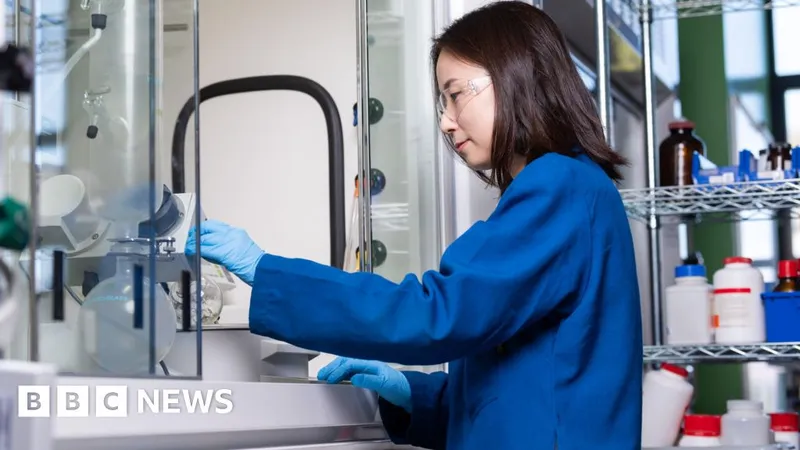 日焼けがエネルギー貯蔵に
カリフォルニア大学サンタバーバラ校のGrace Han教授らは、DNAの仕組みに着目し、分子を太陽光で変形させてエネルギーを貯蔵・放出する技術を開発しました。
この技術は、既存のバッテリーよりも高密度なエネルギー貯蔵が可能で、熱源として応用できる可能性があります。
まだ課題もありますが、次世代のエネルギー供給手段として期待されています。
カリフォルニア大学サンタバーバラ校の化学教授グレース・ハン氏らの研究チームは、日焼けによってDNAが受ける損傷の仕組みに着目し、革新的なエネルギー貯蔵技術の開発に成功したとのことです。この技術は、分子の形状変化を利用してエネルギーを貯め、必要な時に放出するもので、既存のバッテリーよりも高エネルギー密度を実現する可能性を秘めています。
日焼けのメカニズムからのヒント
ボストンからカリフォルニアを訪れた際、強い日差しに肌がすぐに赤くなる経験が、化学教授のグレース・ハン氏の研究のきっかけとなりました。彼女は、日焼けによってDNA分子が受ける形状変化に着目し、その仕組みを応用することで、エネルギーを貯蔵・放出する分子の開発に着手しました。これまでにも同様の技術(分子太陽熱エネルギー貯蔵、Most)の研究は存在しましたが、実用化には至っていませんでした。
Most技術は、分子の形状を変化させてエネルギーを貯め、必要な時にその形状を元に戻すことでエネルギーを放出する仕組みです。これは、ネズミ捕りの仕掛けをセットし、後でトリガーを引いて解放するイメージに似ています。
DNAの自己修復メカニズムの応用
ハン氏らは、DNA分子の形状変化をスムーズに制御するために、皮膚における自然な自己修復メカニズムに着目しました。紫外線によって変形したDNA分子は、酵素であるフォトリアーゼの助けを借りて元の形状に戻るという仕組みです。このフォトリアーゼの働きを模倣した分子をエネルギー貯蔵システムに利用することで、小型で高エネルギー密度を実現できると考えたとのことです。
研究チームは、この分子を用いて小型の容器に入れた水を沸騰させる実験に成功しました。この実験結果は、同技術のエネルギー密度が非常に高いことを示唆しています。
既存バッテリーを凌駕するエネルギー密度
研究チームが発表した論文によると、このMostシステムのエネルギー密度は1.65メガジュール/キログラムに達しており、スマートフォンや電気自動車に広く利用されているリチウムイオンバッテリーを上回る数値とのことです。スペインのバルセロナ工科大学などでMost研究を行うカスパー・モス・ポールセン氏も、この結果を高く評価しています。
一方で、この技術には課題も存在します。分子の形状変化を促す光の波長が300ナノメートルという、過酷な紫外線であることなどが挙げられています。この波長は太陽光に含まれるものの、量が少ないため、実用化にはさらなる技術革新が必要となるようです。
まとめ
グレース・ハン氏らの研究は、日焼けという身近な現象から着想を得た革新的なエネルギー貯蔵技術への道を開くものと考えられます。今後の研究開発の進展により、この技術がエネルギー問題の解決に貢献する可能性も期待されます。
原文の冒頭を表示(英語・3段落のみ)
5 hours agoChris BaraniukTechnology ReporterJeff Liang, UCSBCalifornia's strong sun inspired Grace Han's energy storage researchThe sun does shine, sometimes, in Boston – but not like this.When chemistry professor Grace Han first visited southern California from Boston some years ago, she noticed the difference. How her skin would tingle with the first signs of irritation after just a few hours outside.Last year, she moved to take a job at the University of California, Santa Barbara, and regularly began wearing a large-brimmed hat, sunglasses and plenty of sun cream. Being a chemistry professor, she had already done her research."I was just reading about DNA photochemistry – for leisure," she recalls.That's when she realised that DNA molecules in people's skin that get damaged by sunburn could help her. Those molecules change shape when irradiated by the sun, flexing into a strained version of their regular form.For decades, scientists have sought out molecules that can twist their shape, storing energy in the process, and then be prompted to revert to their original shape, releasing the stored energy on demand.A bit like setting and later triggering a mousetrap. It's known as molecular solar thermal (Most) energy storage and is a potentially very cheap and emissions-free way of supplying heat. These Most systems could store energy for many months or even years.Researchers have previously had limited success with the technology, but, thanks to the California sun, Han knew what to try next.It's important to activate the shape-shifting of the energy-storing molecules in a smooth, repeatable way.Luckily, millions of years of evolution has perfected this process when it occurs in our skin – we are all living chemistry labs, in a sense. DNA molecules in our skin have evolved so that they can repair their sun-contorted shape with the help of an enzyme called photolyase.And such molecules, realised Han, were perfect candidates for an energy storage system. "They are very, very small," she explains. "And can store a massive amount of energy per mass."Han PQ Nguyen, UCSBMolecules created at UCSB trapped enough energy to boil off a small amount of waterIn a paper published in February, she and colleagues described the most promising energy storage system of this kind to date, at least in terms of its energy density. It was powerful enough to cause a "very tiny kettle" in a vial to boil off a small amount of water rapidly, says Han.Her students, who carried out that part of the study, rushed to tell her how it went. "When I actually saw the video and saw how quickly the entire solution was boiling, that was really remarkable," Han recalls.She emphasises that computer analyses predicting how the molecule would perform, made by her collaborator Kendall Houk at the University of California, Los Angeles, and his team, were crucial to the work.Fellow Most experimenter Kasper Moth-Poulsen, who leads research teams at the Polytechnic University of Barcelona in Spain and other institutions, was not involved in the study but was impressed by the results."I think our best systems were one megajoule [of energy per kilogram]. They had, I think, 1.6, which is really amazing," he says, referring to the energy density Han and her colleagues achieved.The 1.65 megajoules per kilogram recorded in their February paper is significantly greater than the energy density of lithium-ion batteries, currently the most popular type of battery for phones and electric cars.John Griffin/Lancaster UniversityJohn Griffin is working on solid versions of molecular storageThe Most system that Han and her colleagues came up with does have some limitations. For one thing, the wavelength of light that causes molecules at the heart of the setup to change shape is 300 nanometres – a form of "very harsh UV [ultraviolet] light", says John Griffin at Lancaster University. "That does come from the sun to us but only in very small quantities."Plus, the trigger used to reverse the shape of the contorted molecule in order to release its energy was hydrochloric acid – a highly corrosive substance that must be neutralised after use. "Not the most ideal choice," admits Han.She says she is hopeful that it will be possible to improve the system's responsiveness to natural light, and also to trigger the energy release without requiring a toxic chemical.The world still relies largely on fossil fuels for heating applications. Molecular solar thermal systems and fossil fuels are actually both forms of chemical energy storage. But the Most technology "operates without burning anything" stresses Moth-Poulsen.Plus, Most could be made available anywhere on Earth, unlike fossil fuels, which are concentrated in some locations. That is why the blockade of the Strait of Hormuz has caused such problems recently, he points out. The fuels produced in that part of the world can't get to where people need them.Moth-Poulsen says that a Most energy storage system could also store energy long-term, even for multiple decades. Thermal energy stored as heat might only last a few hours, days or months at best.There's something else to consider, though, says Harry Hoster, at the University of Duisberg-Essen, who is also scientific director of the hydrogen-focused ZBT Center for Fuel Cell Technology in Germany.The light-sensitive molecules in a Most system must be spread relatively thin. Too thick and light will not be able to penetrate to all of the molecules enough within it. "In a really optimistic scenario, you could probably make this 5mm thick," estimates Hoster.And, packaging your molecules in a liquid means you will likely have to move or pump that liquid from one part of the system to another, to store the energy or transfer it out, for example. This adds cost and complexity. "The moment you need to pump stuff around you have more things that can get broken," says Hoster.Griffin says he and colleagues are working on solid state versions of Most technology. Han, who is also researching solid iterations of Most, says these could take the form of transparent window coatings, for example. That way, they could release heat to prevent condensation or even to warm up rooms.Hoster, though, is sceptical that Most will be able to provide all the heat required in a building. It could, however, warm up temperature-sensitive components on satellites or aircraft."It's great science," he adds. "It's beautiful that they managed to get this functionality right."The innovations and research will likely continue, though it's worth noting that this field remains relatively niche at present. Griffin attended a conference last year on Most technology with roughly 70 attendees, he recalls. "That was basically the whole community in the world on working this stuff."Technology of Business
※ 著作権に配慮し、引用は冒頭3段落までです。続きは元記事をご覧ください。