Elasticsearchを活用した仮想ファイルシステムの実装
 Elasticsearch上
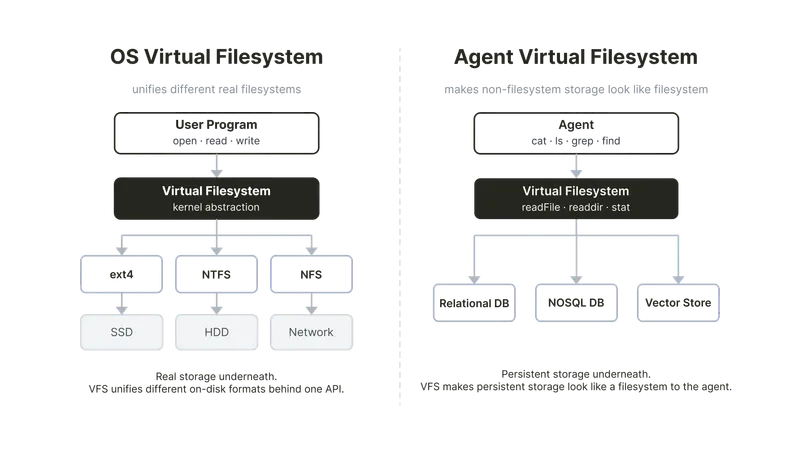
AIエージェントがデータベースのような非ファイルシステム上のデータに対しても、あたかも通常のファイルシステムを操作するかのようにCLIコマンドでアクセスできるようにするため、仮想ファイルシステム(VFS)が考案されています。
本記事では、Elasticsearchをデータ基盤として利用し、VFSを構築する「ElasticsearchFs」の実装を紹介しています。
このシステムは、標準的なシェルコマンド(ls、cat、grepなど)をインターフェースとして提供し、強力な検索機能を利用可能にします。
具体的には、ElasticsearchのDLS(Document Level Security)を用いてデータ層でアクセス制御を徹底し、ファイルナビゲーションをインメモリで行うことでパフォーマンスを最適化しています。
AIエージェントがファイルシステムを操作する能力は、LLM(大規模言語モデル)が大量のコードやシェルセッションから学習しているため自然に備わっています。しかし、実際のデータはデータベースや検索エンジンに格納されていることが多く、従来のファイルシステムをそのまま使うことはできません。本記事は、Elasticsearch上に仮想ファイルシステムを構築し、AIエージェントがまるでローカルファイルにアクセスしているかのようにデータ検索・操作を可能にする技術的なアプローチを解説します。
仮想ファイルシステムの役割と定義
通常、仮想ファイルシステム(VFS)はOSの機能であり、SSD、USB、ネットワーク共有など、異なるストレージデバイスをプログラムに対して統一されたインターフェース(開く、読み書きなど)で提供します。AIエージェントの文脈では、VFSはデータベースやベクトルストアといった永続ストレージの上に「ファイルシステムのようなインターフェース」を構築することを指します。これにより、エージェントは`ls`や`cat`といった標準的なシェルコマンドを使い、内部で実行されている検索インデックスの強力な機能(ベクトル検索など)を意識することなくデータにアクセスできるようになります。
Elasticsearch上でのアーキテクチャ構成
本実装は、4つのレイヤーで構成されています。最上位の「エージェント層」でLLMがシェルコマンドを呼び出し、「シェル層」の`just-bash`ライブラリがそのコマンドをインターセプトし、解析します。次に「ElasticsearchFs層」が、このインターフェースを基盤となる「データ層」(Elasticsearch Serverlessクラスター)に対して実装します。この構造により、エージェントはファイルシステムとして認識しながら、実際にはElasticsearchの高度な検索機能を利用してデータを取り扱うことが可能となります。
アクセス制御とナビゲーションの実現方法
データセキュリティを確保するため、ファイルアクセス制御(ACL)はElasticsearchのDocument Level Security (DLS)を利用しています。これにより、クエリごとに特定のロール(PUBLIC, BILLINGなど)を付与し、データ層でアクセス権限を自動的にフィルタリングします。また、ファイルナビゲーション(`ls`や`find`)は、メタデータインデックスに保存されたパスツリーを読み込み、実行時のプロファイル(ロール)に基づいてアクセス可能なパスを絞り込むことで実現されています。
結論
この仮想ファイルシステムの実装は、AIエージェントが複雑なデータストアを意識することなく、直感的なファイル操作を通じて高度な検索機能を利用するための有効なPoC(概念実証)となります。これにより、LLMの持つ自然なファイル操作能力と、Elasticsearchの強力な検索能力を融合させることが可能になります。
原文の冒頭を表示(英語・3段落のみ)
LLMs have been trained on vast amounts of shell sessions and codebases. That’s why agents are naturally good at using CLIs and navigating filesystems.
A recent blog post describing how LangSmith Agent Builder’s memory system is built on a filesystem kicked off a discussion about whether “filesystems are all you need”. Harrison Chase, LangChain’s CEO and the blog’s author, later clarified that they actually don’t store the data in a real filesystem but in a database and only expose it to the agent in the shape of a filesystem. A few weeks later, Mintlify described how they built a virtual filesystem on top of their existing database to enable an agent to run cat, ls, grep, and find via the just-bash library.
Inspired by these blogs, I explore how you can implement a virtual filesystem over Elasticsearch. This is intended as a proof-of-concept implementation and aims to stay as close as possible to the architecture described in the Mintlify blog. You can find the resulting implementation of ElasticsearchFs at iamleonie/elasticsearch-fs.
※ 著作権に配慮し、引用は冒頭3段落までです。続きは元記事をご覧ください。