世界最深・最長の海底道路トンネルが着工
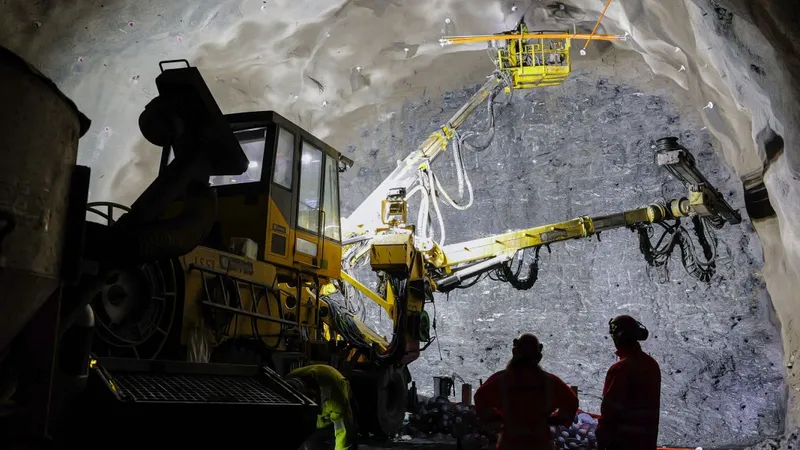 深海を貫く巨大な挑戦
ノルウェーで建設中の世界最深・最長の海底道路トンネル、Rogfast。
全長26.7km、最深部は390mの下に位置するこのプロジェクトは、Norwegiansが得意とする「ドリル・アンド・ブレスト」方法で建設されている。
ノルウェーの地下に潜って、世界最大かつ最深の海底道路トンネル「ローグファスト」の建設現場を取材しました。このプロジェクトは、26.7キロメートルの長さで、海の下390メートルに位置するという、技術的にも挑戦的な工事です。
工事現場の現状
建設現場では、ノルウェーの北の島から南の地域へと、それぞれのチームがトンネルを掘進しています。ノルウェーでは、通常のトンネル掘削機とは異なり、爆破と掘削を組み合わせた方法で工事を進めています。この方法は、長距離の複雑な作業に柔軟性をもたらします。
技術的な挑戦
海底トンネルの建設には、水圧や岩盤の複雑さといった技術的な課題があります。ノルウェーでは、過去数十年にわたり多数のトンネルを建設しており、その技術力は世界に知られています。
完成後の期待
完成後は、2033年に予定されているローグファストは、フェリーのルートを2つ削減し、スタヴァンゲルと Bergen 間の移動時間を40分短縮する予定です。また、海底の下で4車線の交通が流れる予定です。
まとめ
ノルウェーの技術力と挑戦精神が、世界最大かつ最深の海底道路トンネルの建設に向け、新たな可能性を開くことでしょう。
原文の冒頭を表示(英語・3段落のみ)
It’s cold, it’s very, very noisy, and—if I can be quite honest with you—I’m not feeling super relaxed. I’m currently around 300 meters, or 1,000 feet, beneath the North Sea, in a dark, dank cave. It smells weird. And I am increasingly aware of the pressure from millions of tons of seawater just above my head, pushing down with a force of more than 500 pounds per square inch. Picture a baby rhino standing on a postage stamp. Only fabulous engineering is keeping me from being crushed, drowned, disappeared. My safety goggles are foggy. Just a few hundred meters away, someone is about to blow up a giant rock wall. Luckily, earlier that day I was given a full safety briefing, and I’ve got a special hard hat on. “Don’t worry—if you don’t make it, we’ll have your stuff sent back to your office,” geologist Anne-Merete Gilje tells me, straight-faced. Ah, Norwegian humor. “It’s kind of a lifestyle. You have to be a little bit crazy to work underground all the time.” Niclas Brusehed, tunnel foreman, Implenia I’m in this odd situation under the iconic fjords of Norway to visit what will soon become the world’s longest and deepest subsea road tunnel, called Rogfast (short for “Rogaland Fixed Link”). I want to understand how you make something as audacious as a 26.7-kilometer (16.6-mile) highway that sits 390 meters (1,280 feet) below the sea at its deepest point. And also—at a time when it can feel hard to get anything done, especially in the US—to reassure myself that ambitious engineering is still possible. That we can still make things. The Norwegians already have the world’s longest subsea tunnel, the 14.4-kilometer Ryfylke, though Rogfast will dwarf it. Their expertise has attracted attention from Japan, Spain, Morocco, and even a number of US states, whose representatives were due to visit the site in May, just weeks after I went. They, too, want to know how Norway does it. The answer: tons of explosives. The entire endeavor feels like an obstinate refusal to give in to physics and geology. “It’s always exciting,” Niclas Brusehed, a tunnel foreman at Implenia, a Swiss firm involved in the project, tells me. “Every blast creates a new world.” There’s not just the blasting of the tunnel itself—although that is an epic project on its own—but an immense logistics challenge involving huge ventilation shafts, extreme pressure, underground roundabouts, and the complex Norwegian geology. Oh, and the water. So much water.
“This is the longest continuous blast on the sea,” says John Olaf Østerhus, assistant project manager at Implenia. “Never been done before. We can’t buy a book to see how we do this.” All right, time to fish my phone out of my safety suit—don’t want to forget this. On another planet Arriving at the rock face where the tunnel hits seabed feels like being on the moon. It’s a huge slab of stone at the end of a long, dark, wet, wide passageway that’s lit (barely) by electric lights. Giant vehicles carting tons of rocks rumble past periodically, and we pull to the side of the road to let them by. Rescue chambers are spread throughout the tunnel network.COURTESY OF NORWEGIAN PUBLIC ROADS ADMINISTRATION Workers clock in for 12-hour shifts, 6 a.m. until 6 p.m., deep in the bowels of the Earth where no natural light can reach. Twelve days on, 16 days off. They eat their lunch at a table in this damp cave surrounded by portacabins plastered with safety notices. “It’s kind of a lifestyle,” says Brusehed, laughing. “You have to be a little bit crazy to work underground all the time.”
These crazy engineers are here to make tunnels the Norwegian way. The nation frequently uses what’s known as the drill-and-blast method instead of the tunnel-boring machines that are more typical elsewhere. This approach offers more flexibility for long, complex operations with varied rock types. Each blast adds about five to six meters to the tunnel. Rogfast is being built inward from the ends to speed things up. The construction company Skanska is leading from the north, coming from the island of Vestre Bokn; Implenia has joined a company called Stangeland to tunnel from Randaberg in the south, which is where I am. Both teams use multiple laser scans each day to consistently measure their orientation and check that the tunnel is exactly where it should be. The two ends should meet sometime in 2029, with no more than just a few centimeters of deviation. The caves are like towering cathedrals, scattered with rubble.COURTESY OF NORWEGIAN PUBLIC ROADS ADMINISTRATION Norway has constructed more than a thousand kilometers of tunnels over the past several decades. The depth and length of these make the best efforts to date of Elon Musk’s Boring Company—a mere 2.7-kilometer tunnel in Las Vegas that is just 3.6 meters wide—look rather pathetic. The country’s spectacular setting makes such builds necessary; while Norwegians are proud of having the second-longest coastline in the world after Canada, getting up and down the west coast requires multiple ferry rides between islands, which can move extra slowly when the weather’s bad. After it’s completed, which is scheduled to happen in 2033, Rogfast should help eliminate two ferry routes and cut the five-hour journey between the southwestern cities of Stavanger and Bergen by 40 minutes. It will funnel four lanes of traffic deep beneath the fjords of Boknafjord and Kvitsøyfjord, and at one section a relatively scant 50 meters of rock will separate the drivers speeding through the tunnel from the bottom of the North Sea. There are also, delightfully, two undersea roundabouts located 220 meters below sea level. But the first job is to contend with all that water. The never-ending battle Subsea tunneling is defined by a constant, ultimately unwinnable battle with the ocean. The sheer weight of the sea above you, and the crushing pressure, means the water will always find a way in. “It’s the volume and the pressure that’s the biggest risk,” says Ole Magne Rønning, project leader for Implenia/Stangeland.
※ 著作権に配慮し、引用は冒頭3段落までです。続きは元記事をご覧ください。