医療記録請求を高速化する電子署名
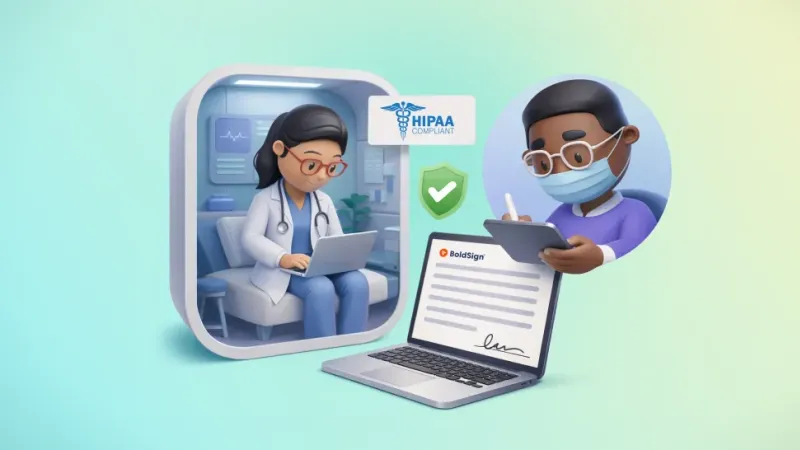 電子署名で医療記録請求を改善
医療記録請求の遅延は、不完全な書類や署名の不足、身分証明の確認などが原因で起こりがちです。
BoldSignの電子署名ツールを活用することで、医療機関はこれらの課題を解決し、HIPAAに準拠した安全なデジタルプロセスで記録請求を迅速化、エラーを削減できます。
テンプレート、リマインダー機能、リアルタイム追跡などの機能により、効率的で安全な医療記録管理を実現します。
アメリカの電子署名サービス「BoldSign」が、医療記録の開示要求プロセスにおける遅延やエラーをデジタル化によって改善する方法を解説するブログ記事を公開しました。医療記録の開示は、患者の権利として非常に重要ですが、手続きの煩雑さから遅延やエラーが発生しやすいとのこと。BoldSignのツールが、どのように医療現場の課題を解決するのか、そのポイントをまとめました。
医療記録開示の課題:手作業による非効率性
医療記録の開示要求は、フォームの不備、署名の欠如、身分証明の確認など、多くの要因によって遅延しがちです。特に紙ベースのワークフローは、担当者間の手戻りや追跡の難しさから、非効率性を招きやすいとのこと。フォームの誤入力や、情報が不整合になるリスクも高まります。これらの問題が複合的に作用し、患者への情報提供が遅れるだけでなく、医療機関の業務負荷も増加させている状況があるようです。
デジタル化がもたらすメリット:一貫性と効率性
医療記録の開示プロセスをデジタル化することで、スピードだけでなく、一貫性と効率性が向上します。標準化されたフォームの利用、リアルタイムでの進捗状況の追跡、適切な担当者への自動ルーティングなどが可能になり、手作業によるミスを減らすことができます。また、監査証跡を残すことで、コンプライアンス(法令遵守)を強化できる点も大きなメリットです。BoldSignは、これらの課題を解決するための機能を提供しているとのこと。
BoldSignの活用:テンプレートとリマインダー
BoldSignは、医療機関が利用できるテンプレート機能を提供し、開示・承認フォームの形式を統一することで、情報漏れや誤入力を防ぎます。また、署名やレビューが遅れた場合に自動リマインダーを送信することで、手続きの停滞を防ぎ、スタッフの手間を削減します。さらに、役割に応じたルーティング機能により、適切な担当者にスムーズに情報を引き継ぐことができ、全体的な業務効率の改善に貢献するようです。
まとめ
医療記録の開示要求プロセスをデジタル化することで、患者への情報提供の迅速化、医療機関の業務効率化、そしてコンプライアンスの強化を実現できます。BoldSignのような電子署名ツールは、これらの課題解決に役立つ有効な手段の一つと言えるでしょう。
原文の冒頭を表示(英語・3段落のみ)
TL;DR: This blog highlights common medical records request challenges and shows how BoldSign’s HIPAA-compliant eSignature tools help reduce delays, errors, and paperwork through a secure digital process.Medical records requests get delayed most often because forms are incomplete, signatures are missing, identity checks take time, and paper-based workflows are hard to track. A faster approach is to digitize requests with HIPAA compliant eSignatures, reusable templates, automated reminders, identity verification, real-time tracking, and audit trails. This guide explains the medical records request process, the biggest causes of delays and compliance risk, and how BoldSign helps healthcare teams reduce errors and deliver records faster. Where medical records requests usually break downTraditional release workflows often look manageable on paper, but in practice they create friction at multiple points.The most common issues include:Slow processing caused by manual handoffs and backlogsIncomplete or missing signatures that require repeated follow-upPaperwork errors from handwritten or repeatedly entered informationUnclear request status once forms start moving between teamsCompliance risks when communications or document handling are inconsistentLost or misrouted requests caused by paper-based processesNone of these problems are unusual on their own. Together, they create a slow and error-prone system that makes records requests harder to manage than they should be.What a reliable medical records request process should look likeA secure medical records request process usually follows a clear sequence.First, the patient or authorized party submits a request form that includes the records needed, the purpose of release, recipient details, and the preferred delivery method. Then the provider verifies identity and authorization, reviews the request for completeness, retrieves the necessary records, prepares them for release, and delivers them through a compliant channel. The original draft lays out this process clearly, including identity checks, provider review, retrieval, release preparation, and final delivery.That workflow is straightforward in theory. The problem is that many teams are still managing it with disconnected steps, manual reviews, and paper forms that leave too much room for delay.Why digital workflows work betterThe biggest advantage of digitizing medical records requests is not just speed. It is consistency.Digital workflows make it easier to:Standardize request and authorization formsReduce missing fields and incomplete submissionsTrack request status in real timeRoute documents to the right people in the right orderKeep a secure activity history for compliance reviewThe original draft also compares digital and paper forms across accessibility, speed, storage, error reduction, tracking, and security. That comparison supports the same conclusion: digital workflows reduce delays by improving visibility, accuracy, and control.How BoldSign helps reduce delays and errorsBoldSign fits this workflow because it addresses the exact points where medical records requests tend to slow down.Templates for release and authorization forms Healthcare teams can create reusable release, authorization, and consent forms so every request starts from a consistent format. That helps reduce missing information and lowers the chance of avoidable mistakes. The draft calls out templates as a way to improve consistency and reduce incorrect or incomplete information.Create new templateAutomated reminders When signatures or reviews are delayed, reminders help keep requests from stalling. This reduces the need for staff to chase patients or internal stakeholders manually. The original draft includes automated reminders specifically as a way to prevent stalled requests and reduce follow-ups.Send automatic follow‑ups to patients and internal reviewers to prevent stalled requests and reduce manual follow‑ups.Automate remindersRole-based routing Medical records requests often involve more than one step or reviewer. BoldSign helps route each request to the right people in the right order, which reduces handoff errors and makes the process easier to manage. The draft explicitly maps this to patient/requester, reviewer, and approver roles.Role-based routingReal-time tracking When staff can see where a request stands, they can identify bottlenecks faster and avoid the “where is this request now?” problem that slows teams down. The original version positions tracking as a way to monitor request status from sent to completed.Real-time trackingSecure audit trailIn healthcare, it is not enough to complete a process, teams also need a clear record of what happened. BoldSign’s audit trail supports compliance reviews by showing when documents were viewed, signed, and completed.Audit trailIdentity verification and secure accessThe draft also highlights identity verification, encrypted workflows, access controls, and the ability for patients to sign without creating an account. These features matter in a healthcare context because they improve security without adding unnecessary friction for patients.HIPAA compliant eSignature workflow Handle sensitive medical records and PHI using HIPAA‑compliant, encrypted eSignature workflows with access controls designed for healthcare use cases.Branded patient experience Create a consistent and professional signing experience with custom branding across emails and signing pages, helping patients recognize your organization and complete forms with confidence.BrandingWhy this matters for healthcare teamsMedical records requests are not just administrative tasks. They are part of a regulated process that has to be both efficient and defensible.When forms are incomplete, signatures are delayed, or requests are hard to track, the result is not just slower turnaround. It also creates more work for staff and increases the chance of compliance mistakes. The original draft repeatedly ties delays to incomplete submissions, paper handling, misrouting, and weak tracking, all of which are exactly the kinds of issues healthcare teams need to reduce.That is why a better records request workflow should do more than digitize a form. It should reduce friction across the whole request lifecycle.Digital vs paper forms in medical records requests Digitizing forms reduces delays, improves tracking, and lowers the risk of lost paperwork. Comparison point Digital forms Paper forms Accessibility Accessible anywhere on supported devices Requires physical handling Speed Faster distribution and completion Slower handoffs and processing Storage Easy centralized storage Requires physical storage space Error reduction Can reduce incomplete submissions Higher risk of missing fields Tracking Status visibility and activity history Hard to track progress Security Secure handling with controls Vulnerable to loss or damage Digital workflows reduce delays by improving visibility, accuracy, and control. Conclusion The medical records request process does not have to be slow or stressful. By replacing paper-based steps with a digital workflow, healthcare teams can reduce missing signatures, avoid lost requests, and improve turnaround times. With BoldSign’s HIPAA compliant eSignature tools, templates, reminders, identity verification, tracking, and audit trails, providers can deliver records faster while maintaining a secure and traceable workflow. If you’re not yet a BoldSign user, start a free trial to explore these capabilities, or schedule a demo for a walkthrough. FAQs What causes delays in medical records requests? Delays often come from incomplete forms, missing signatures, slow manual review, identity verification steps, and lack of tracking in paper-based workflows. How can healthcare teams reduce errors in medical records requests? Using templates, required fields, routing, and audit trails helps reduce missing information and keeps approvals consistent. How does BoldSign help with medical records requests? BoldSign supports digital release forms with templates, automated reminders, role-based routing, real-time tracking, and audit trails to speed up approvals and reduce manual follow-ups. Can patients sign medical records release forms without creating an account? Yes. Patients can sign using a secure link without registration, downloads, or account creation. Why are audit trails important for medical records workflows ? Audit trails provide traceable evidence of document actions such as viewing and signing, which supports compliance review and internal governance.
※ 著作権に配慮し、引用は冒頭3段落までです。続きは元記事をご覧ください。