The fall of the theorem economy
```json
{
"titleJa": "定理経済の終焉",
"summaryJa": "数学者である著者は、自身の未発表の定理やアイデアについて考察する中で、数学の世界における「定理経済」の終焉を感じている。
数学研究の核心は定理の証明ではなく、概念的な枠組みの構築にあるという。
しかし、定理を主張することでその進歩を阻害してしまう可能性もあり、重要なのは定理そのものではなく、それを可能にする言語や概念的な基盤である。
AIの急速な発展に伴い、数学界の価値観や存在意義に対する危機感も抱いている。
"
}
```
数学における「定理」の価値が問われる時代が来ています。著名な数学者が自身の経験を振り返り、AI時代における数学のあり方について考察を深めたことが明らかになりました。本記事では、形式的な証明の積み重ねだけでは捉えきれない、数学の本質的な創造性とは何かを解説します。
定理よりも重要な「概念の明晰さ」
ある数学者は、自身の最も優れた成果は「書き留めなかった定理」だと語っています。彼は、あるアイデアが閃いた瞬間、その結果が非常に明白で説得力があると感じたため、正式な定理として発表するのではなく、スライドの隅にメモ書きとして含めたそうです。しかし、この行為は、後から誰かが正式に書き起こすインセンティブを奪ってしまうという、思わぬ結果を招いたと反省しています。数学の価値は、単なる証明の形式ではなく、アイデアの明晰さにあるという考えが示されています。
研究の難しさは「概念の構築」にある
数学研究における真の難しさは、定理を証明することではないと、この数学者は主張しています。彼が考える最も難しい部分は、「何か(定理)があるはずだ」と直感すること、そしてそれを表現するための概念的な枠組みを構築することだそうです。定義を正しく設定できれば、残りの証明は比較的スムーズに進むとのことです。これは、単なる論理的な推論の積み重ねという従来の認識を覆すものです。
AI時代における数学の危機感
急速に変化するAIと数学の関係性について、この数学者は複雑な感情を抱いていると述べています。科学的な準備ができたという満足感がある一方で、この分野の価値観が消滅するのではないかという不安も感じているそうです。彼は、数学を「公的な数学(形式的な演繹システム)」と「秘密の数学(直感や創造性の側面)」の二つに分けて捉え、後者の重要性が軽視されてきた現状を指摘しています。
結論
数学の進歩は、厳密な証明という形式的な側面だけでなく、直感や概念を構築する「秘密の数学」によって支えられています。AIが形式的な作業を担う時代だからこそ、人間ならではの創造性や洞察力が、数学の未来を形作る鍵となると考えられます。
原文の冒頭を表示(英語・3段落のみ)
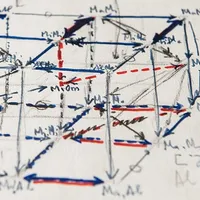
“The product of mathematics is clarity and understanding. Not theorems, by themselves.”—Bill ThurstonHandwritten diagram by Alexander GrothendieckMy best theorem is one I never wrote down.It crystallized one bright morning in Lausanne, Switzerland, as I was preparing for my last invited conference talk. The proof felt so obvious—and the result so compelling—that I made the reckless move of editing my slides at the last minute. Time was running out and I could only include the announcement as an informal remark at the bottom of the last slide, instead of stating it as a proper theorem.1I had already quit academia and founded a machine-learning startup. I knew I would be too busy to write a clean proof and publish it. That was my excuse for being sloppy. I just wrote the remark and abandoned the slide deck as a message in a bottle.My hope was that some bright young mathematician would pick it up someday and formalize the result as part of a broader theory. If I lucked out with the intrinsic randomness of attribution, I thought, it might even be remembered as the Bessis cellular decomposition theorem.But that was stupid. By claiming the result, I had killed the incentive for anyone to write it up.If I had to pick my second best result, it would be Theorem 0.5 in my old preprint on Garside categories. I had high ambitions for this paper, yet I ended up not submitting it anywhere. The creative process had drained me, and I left active research before regaining the courage to clean up the preliminary sections.For a second best, this theorem is shockingly easy to prove. Once you get the preliminaries right, it only takes a few pages of pretty terrestrial group theory.As for the preliminaries, they are even easier. All you have to do is plagiarize a dozen or so classical papers in an arcane subfield called Garside theory, replacing the original axiom set with a slightly more general one. If you understand what you’re supposed to do, it is almost impossible to run into serious difficulties—it’s just a giant conceptual find-and-replace bulk edit. But you have to take my word for it, because I balked at producing the hundreds of pages of necessary details.If you think that the hard part of a mathematician’s job is to prove theorems, let this serve as a counterexample—from the moment I conceived of Theorem 0.5, I knew it was true and that proving it would be straightforward.What was the hard part, then?Conjecturing the exact statement and writing it down?Not even. In this example, this part was equally straightforward.The hard part was to intuit that there should be “something like Theorem 0.5”, and to come up with a conceptual framework where it became easy to express. Once I got the definitions right, the rest followed more or less organically.Research mathematics isn’t always like that, but there are miracle days where you just put your skis on and the next thing you know is that you’re accelerating downhill. Jean-Pierre Serre famously said that writing his revolutionary paper on coherent sheaves didn’t require any thinking. Everything fell so naturally into place that his typewriter generated the 100 pages entirely by itself, as if the article had pre-existed.But I wasn’t Jean-Pierre Serre and he wouldn’t lend me his typewriter. This is why my brightest mathematical idea never made it to publication.Do I feel sad about it? Not really. My preprint remains freely available on the arXiv and has already been cited dozens of times, including by some fancy papers. The real innovation wasn’t Theorem 0.5, but the language that made it possible, especially Definitions 2.4 and 9.3—and this language found its way to a 700-page book on Garside theory that filled out much of the missing preliminaries.To be honest, I also had a selfish reason for sacrificing my most innovative preprint. It enabled me to focus on the more tedious preprint where I used Definition 9.3 as a magic ingredient in the resolution of a classical problem in my domain, the 𝐾(𝜋,1) conjecture for finite complex reflection groups, which permanently elevated my symbolic status as a mathematician.But, in truth, the David who solved the 𝐾(𝜋,1) conjecture is a social parasite of the much better mathematician, the David who crafted Definitions 2.4 and 9.3.In the past few months, as I was grappling with the rapidly changing situation around AI and mathematics, I found myself more troubled than I ever expected to be.In theory, I should feel vindicated and happy. In practice, I am also puzzled, worried, and sad.The happy part of me sees a genuine revolution and gets excited. The vindicated part has legitimate claims to have prepared for it scientifically and epistemologically. The puzzled part is stunned by the timeline and accompanying frenzy. The sad part feels nostalgic for a lifestyle and value system that it engaged with and walked away from, and which might soon disappear. The worried part holds the synthesis. I always knew that the general public had a flawed perception of mathematics, but never expected this to become an existential threat for the discipline itself.In my book Mathematica: a Secret World of Intuition and Curiosity, I framed the misunderstanding as the tension between two versions of mathematics, official math and secret math.Official math manifests itself as a formal deduction system where you start from axioms and mechanically derive theorems. This is a nerd’s paradise, a world where truth takes binary values, reasoning is either valid or invalid, and there is technically no room for bullshit.Secret math is the human part of the story—why official math was invented, how we can successfully interact with it, its effects on our brains, and the bizarre mental techniques through which mathematicians continuously expand its territory.Secret math never made it to the curriculum, because it lacks the defining qualities of official math, and also because it feels peripheral. Official math is cold, hard, logical, objective, and it is rumored to be the language of the universe. Secret math is soft, fuzzy, subjective and, by contrast, it looks like cheap pedagogical backstory.No wonder professional mathematicians have such a dissociative view of their job.The first rule of the Intuition Club is: you don’t talk about the Intuition Club. The second rule is, if you really want to talk about intuition, make it sound casual and accessory, because we ain’t the psychology department. The third rule is definitions are worth zero points, expository work counts negative, and the best jobs should always go to the people who proved the hardest theorems.If you think I’m exaggerating, here is what G. H. Hardy wrote in his celebrated (yet insufferable) mathematical autobiography:There is no scorn more profound, or on the whole more justifiable, than that of the men who make for the men who explain. Exposition, criticism, appreciation, is work for second-rate minds.This is peak dissociation. Behind closed doors, mathematicians are quick to complain about Hardy’s curse. They insist on the importance of teaching, even for their own comprehension of the subject matter. They lament the system’s pathological obsession with theorem-proving priority, while everyone knows the hard work often takes place outside of that loop, when trying to make sense of existing results. Yet, in public, they are bound by the honor code of mathematicians. Prove theorems and shut up!There is one exception, though. Once you get the Fields medal, you are free to say whatever you want.Bill Thurston, the 1982 Fields medallist, was a spectacular dissenter. Two years before his death, he took part in an extraordinary exchange on MathOverflow, in response to this question posted by an insecure undergrad:What can one (such as myself) contribute to mathematics?I find that mathematics is made by people like Gauss and Euler—while it may be possible to learn their work and understand it, nothing new is created by doing this. One can rewrite their books in modern language and notation or guide others to learn it too but I never believed this was the significant part of a mathematician work; which would be the creation of original mathematics. It seems entirely plausible that, with all the tremendously clever people working so hard on mathematics, there is nothing left for someone such as myself… Perhaps my value would be to act more like cannon fodder? Since just sending in enough men in will surely break through some barrier.Thurston jumped in:It’s not mathematics that you need to contribute to. It’s deeper than that: how might you contribute to humanity, and even deeper, to the well-being of the world, by pursuing mathematics? Such a question is not possible to answer in a purely intellectual way, because the effects of our actions go far beyond our understanding. We are deeply social and deeply instinctual animals, so much that our well-being depends on many things we do that are hard to explain in an intellectual way. That is why you do well to follow your heart and your passion. Bare reason is likely to lead you astray.2 None of us are smart and wise enough to figure it out intellectually.The product of mathematics is clarity and understanding. Not theorems, by themselves. Is there, for example any real reason that even such famous results as Fermat’s Last Theorem, or the Poincaré conjecture, really matter? Their real importance is not in their specific statements, but their role in challenging our understanding, presenting challenges that led to mathematical developments that increased our understanding…Mathematics only exists in a living community of mathematicians that spreads understanding and breathes life into ideas both old and new. The real satisfaction from mathematics is in learning from others and sharing with others. All of us have clear understanding of a few things and murky concepts of many more. There is no way to run out of ideas in need of clarification…Here we need to take a short metaphysical break, because it is all too easy to brush Thurston’s words off as “feel-good” or “woke”.In my first Substack post, I (half-jokingly) declared that we had been wrong about mathematics for 2300 years, stuck in a false dilemma between formalism (“mathematics is a meaningless game of formal symbols”) and Platonism (“mathematics captures properties of actual entities living in the perfect world of ideas”).My proposed conceptualist resolution is a rephrasing of Thurston’s view: mathematics does rely on a meaningless game of formal symbols, but we only play this game because we project meaning onto it.Meaning is a cognitive phenomenon—a product of our neural architecture—and not a direct access to transcendence.When we “do math”, we manipulate formal expressions and gradually develop an intuitive feel for what they represent, as if they were pointers to objects that “existed” in a Platonic sense. Platonists take this neuroplastic side-effect at face value. Formalists view it as accessory. Conceptualists like me recognize mathematics as a critical cognitive infrastructure of the human species.A natural question is why the conceptualist resolution took so long to emerge. One reason is that it goes against the prevailing spiritualist worldview, which refuses physicalist interpretations of mathematics.It also goes against the honor code of mathematicians. Hardy’s curse is so powerful that even Thurston found it hard to overcome. When multiple MathOverflow users thanked him for his take, he noted in reply:Thanks for the comments. I try to write what seems real. By now, I have no cause to fear how I will be judged, which makes it much easier for me. It’s gratifying when my reality means something to others.But then, how could such a toxic honor code survive for so long?The answer is simple. The honor code was useful to mathematics as an academic discipline. It helped it stay exceptionally healthy and meritocratic, as noted in the epilogue of my book:This system has its merits. It reduces arbitrariness and helps mathematicians guard against complacency and nepotism. When a discipline deals with eternal truths, it offers a neat way to evaluate careers.The honor code also served as a guide to researchers themselves, when evaluating new ideas and new directions of research. Concept-building and problem-solving, the two facets of mathematics, are in a symbiotic relationship, as remarked by 2018 Fields medallist Peter Scholze:What I care most about are definitions. For one thing, humans describe mathematics through language, and, as always, we need sharp words in order to articulate our ideas clearly… Unfortunately, it is impossible to find the right definitions by pure thought; one needs to detect the correct problems where progress will require the isolation of a new key concept.3This is how the system worked for millennia. Mathematicians created value by introducing new concepts, but the rule was that only theorems could put bread on the table. The deal was fine because the two aspects almost always walked hand in hand. David, the social parasite who claimed credit for the 𝐾(𝜋,1) conjecture, was the same person as the David who crafted Definitions 2.4 and 9.3.Solving a big conjecture was a cryptographic proof that you had come up with a genuine conceptual innovation.I am using the past tense because this is no longer the case. There is a structural vulnerability in the honor code of mathematicians and AI has started exploiting it in a systematic manner.The trigger for this post was a speech by Geoff Hinton, which caught me off guard:I agree with Demis Hassabis, the leader of DeepMind, who for many years has said AI is going to be very important for making scientific progress…There’s one area in which that’s particularly easy, which is mathematics, because mathematics is a closed system…I think AI will get much better at mathematics than people, maybe in the next 10 years or so. And within mathematics, it’s much like things like Go or Chess that are closed systems with rules...I was used to the general public being profoundly wrong about the nature of mathematics. But I wasn’t prepared for a Turing awardee and Nobel prize winner comparing it with Go and Chess.I wrote a short response on X and tried to move on, but it kept troubling me.Then it all clicked into place. About a year ago, I had been approached by a young mathematician friend who had done his PhD in my domain. He was thinking about launching an “AI for pure math” business and I mentored him for a while.Like him—and like Hinton and Hassabis—I was fully convinced that AI was about to transform mathematics and science in general. But I was unsure about the business model and minimum viable product.Mathematicians may look like Luddites, but they rarely are. They love pen and paper, blackboard and chalk, but they jumped on Donald Knuth’s typesetting revolution. A century ago, they chose to rebuild their entire knowledge stack on a new operating system, set theory, that promised massive gains in reliability and scalability. A few decades later, they recognized that there was no real difference between a mathematical proof and a calculation, and set out to build the first computers. Deep learning, with its heavy use of linear algebra and stochastic gradient descent, is a brainchild of mathematics.In the 1970s, when Kenneth Appel and Wolfgang Haken built a computer-assisted proof of the four-color theorem, this opened an intense debate on the epistemic nature of such proofs and their admissibility in peer-reviewed journals. Although, to be honest, there never was much suspense—the barbarians won, because there were barbarians on both sides.Computers had always been part of my mathematical life4 and the promise of AI and autoformalization had long felt irresistible to me. This is what got me excited when my friend reached out and asked for my advice.I started looking at the “AI for math” space and couldn’t understand what was going on. Why were these startups raising so much money? Pure mathematics is such a tiny market. The investments felt disproportionate.My preferred strategy, the one I would have pursued, was to create the Wolfram Research of the AI age. Mathematics-enabled science and technology is a much larger market than pure mathematics and, as Wolfram demonstrated, there is room for simplifying and productizing the experience of interacting with mathematical objects. The users love the product and it is sticky.But my friend insisted he wanted to do something specifically about pure math.I didn’t know what to say, because I was stuck. The only useful products I could think of were literature spotters and interactive proof assistants—hard to package, hard to price, and even harder to sell. I could see a long term business strategy, but it was one I wouldn’t touch with a ten-foot pole—becoming the Elsevier of the AI age, the most hated brand in science, an arm-twisting extractive monopoly that repackages the mathematical commons into a mandatory experience.There was a third strategy, though. But it was risky and, like the previous one, it did require a certain degree of cynicism. I’d call that plan the luxury acquihire: 1/ build a useless product that is striking enough, 2/ give the impression that you have solved a major scientific problem, 3/ pray for a quick M&A by a tech giant or a major AI lab.Still, the numbers didn’t add up. The “AI for math” startups were rumored to be raising hundreds of millions. There must have been a smarter investment thesis, which I was failing to comprehend.5Then I heard that Google was leading a massive effort to solve the existence and smoothness of Navier–Stokes equations. I thought OK, I get it, that’s a Millennium Prize problem. But, wait, that still doesn’t make sense—the payout is one million dollars, peanuts. As one great mathematician remarked to me, Google likely mobilized more brainpower on this single effort than the entire community ever did.It only started to make sense after I heard Hinton’s speech.If mathematics really was a closed system—or if this is what all the stakeholders around the table are willing to believe—then the investment pitch becomes trivial: “DeepMind solved Go and Chess, we’re going to solve mathematics!”At a time when the leading AI labs are betting trillions that humans are soon to become obsolete, the promise of “solving mathematics”, the crown jewel, the pride of the human race, is simply irresistible.On February 5th, a team of eleven high-profile mathematicians (including Martin Hairer, the 2014 Fields medallist) announced the First Proof project and released a first batch of ten “research-level math questions”:This manuscript represents our preliminary efforts to come up with an objective and realistic methodology for assessing the capabilities of AI systems to autonomously solve research-level math questions. After letting these ideas ferment in the community, we hope to be able to produce a more structured benchmark in a few months.One of our primary goals is to develop a sophisticated understanding of the role that AI tools could play in the workflow of professional mathematicians. While commercial AI systems are undoubtedly already at a level where they are useful tools for mathematicians, it is not yet clear where AI systems stand at solving research level math questions on their own, without an expert in the loop.From a purely scientific perspective, there is nothing to complain about. These are incredibly smart people, engaging a real-world controversy with an open-minded attitude and a creative approach.The First Proof team was doing everything right—and this is what terrified me.But before I explain, I must reiterate that I have a very high opinion of this project. The team represents the mathematical community at its best, people driven by curiosity and integrity, willing to experiment outside of their comfort zone, and they did come up with genuinely good ideas.Danie
※ 著作権に配慮し、引用は冒頭3段落までです。続きは元記事をご覧ください。