逆引き索引の謎
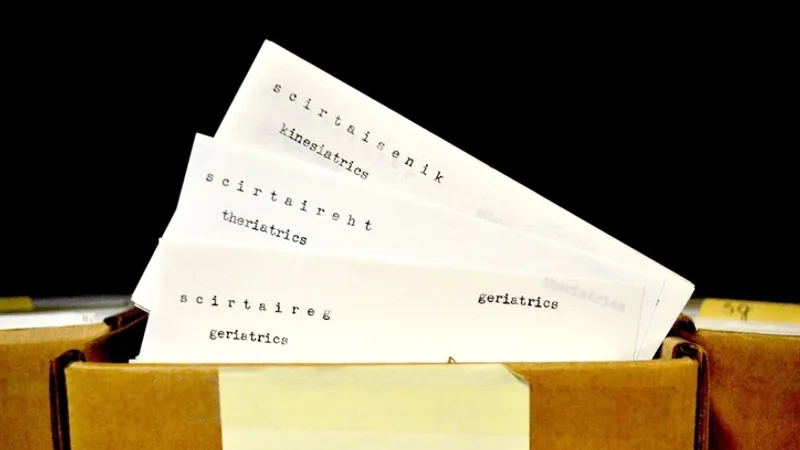 逆引き索引が実現した辞書の進
本記事は、コンピューター時代以前の辞書編纂で使われた革新的な手法「Backward Index(逆引き索引)」を紹介している。
このシステムは、辞書内の全単語を逆向きにタイプし、その逆スペリングに基づいて索引を物理的に作成することで機能した。
これにより、特定の接尾辞で終わる関連語群の網羅的な検索や、ライミング辞書の初期調査が手動で可能となった。
この手動の索引は、現代の電子的な検索技術に匹敵する高度な情報抽出を可能にした、画期的なツールであった。
原文の冒頭を表示(英語・3段落のみ)
Say you wanted to find out how many words end in "-ology" or "-ism." How would you figure it out? Ok, you'd use a computer. Now then, let's take computers out of the picture. Is there any way to find that information, short of flipping through the entire dictionary?
Philip Gove, editor of Merriam-Webster's Third Unabridged, had a faster way. The first step: Type all of the words in the dictionary backwards. Editor-at-Large Peter Sokolowski takes a look into the Backward Index.
Structure was paramount to Gove. He was a linguist who used the logic of a programmer long before the days of personal computing, and in the 1950s and '60s he seems to have been thinking about the dictionary with the extreme rigor of a software engineer. Though he could never have imagined search as we know it today, he would have been among the first to intuit its uses for lexicographers. So as work on the Third was winding down Gove set the typing staff to the task of creating a 3"x5" slip for virtually every word that appeared in boldface in the dictionary typed backward, each letter followed by a space (and spelled normally, without the extra spaces, below its backward spelling).
※ 著作権に配慮し、引用は冒頭3段落までです。続きは元記事をご覧ください。