Hội nghị báo chí của Kevin Warsh va chạm 30 năm của Michael Woodford
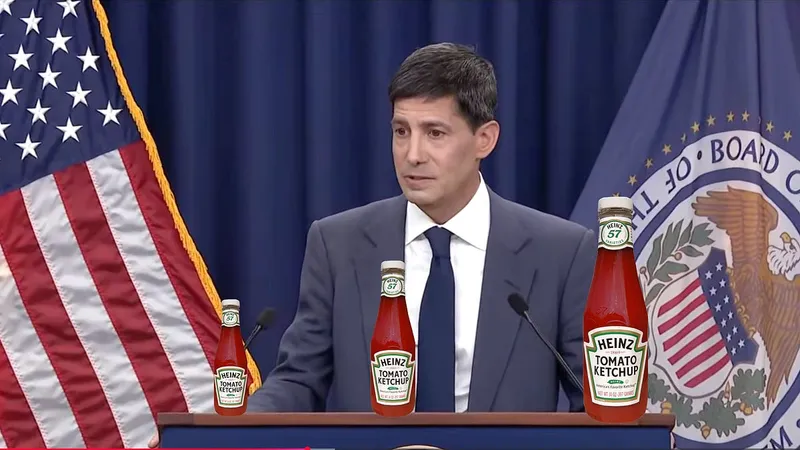 Ketchup Kinh T
Kevin Warsh phản đối việc truyền thông chính sách của Cục Dự trữ Liên bang (Fed), không cung cấp thông tin cụ thể về dự báo kinh tế và phản ứng chính sách. Ông cho rằng thị trường tài chính nên dựa vào dữ liệu thực tế thay vì thông tin từ Fed. Tuy nhiên, việc Fed theo dõi dự báo thị trường có thể gây ra sự mơ hồ và bất ổn trong chính sách. Các nhà kinh tế như Bernanke và Woodford từng chỉ ra rằng việc theo dõi dự báo thị trường có thể dẫn đến sự không xác định trong cân bằng kỳ vọng.
Show original excerpt (English · first 3 paragraphs)
We knew that Kevin Warsh was opposed to forward guidance of interest rates. The question going into his first FOMC meeting and presser is how opposed he was to central bank communication in general. Where was he on the Summary of Economic Projections, or describing current market conditions, or pointing to a policy rule and reaction function?The efficiency of the ketchup market is the best established fact in empirical economics.Apparently he is opposed to all those as well. Trimming down a bloated FOMC policy statement is good.1 But it’s not just that he didn’t submit his estimate of appropriate future policy rates over the next few years (the “dot plot”) last week, he apparently didn’t submit any values for the Summary of Economic Projections, which has existed since 2007. During the press conference he conveyed very little information on what the Fed is thinking at all. When asked explicitly about his “reaction function” he deflected. See Nick Timiraos’s WSJ coverage on how confused it left everyone.Maybe that’s fine if this was a boring meeting, but with inflation increasing, financial markets really wanted to know if hikes were more likely to be on the table. I’m trying to imagine the counterfactual where there was no dot plot and all the other information was also missing, with traders suddenly having to price in a ton of confusion over multiple possible Fed reactions. Rates would be basically indeterminate (remember that word, we’ll come back to it in a minute) in this scenario.Modern macroeconomics is about expectations. What’s the theory of expectations here? When asked about rolling back communication, Warsh gave a very specific answer (transcript):EDWARD LAWRENCE. Thanks. Welcome, Mr. Chairman. Edward Lawrence with Fox Business. So, if you don’t give a lot of ongoing forward guidance, won’t the market have more volatility, and shouldn’t Americans have more access into what you’re thinking going forward?CHAIRMAN WARSH. So I think financial markets perform best when they react to incoming data. I think the financial markets work less efficiently when they ask a question. How will the Federal Reserve react to that incoming information? The more that markets are paying attention to what’s happening in the real economy, deciding what’s good data and what’s less good data, the more financial markets can price what they believe is the most likely and what are the tail risks.Financial market prices are probably the most important source of information to guide central bankers. But when all the financial markets are doing is reflecting back what we’ve said, then we’re taking the most important source of information and we’re being blind to it. I’d like us to create a system where those blinders come off, where markets are following data that they efficiently think is reliable. And they’ll be watching data, we’ll be watching data. They’ll come with better information through market prices to us, we can make more informed decisions.Read that again. This is not what I was expecting, which was an argument that forward guidance locks the central bank into paths it fears it cannot change (which is what he said during his Senate testimony). That argument relates to the recent inflation wave and I think it is important to debate it. (A fan chart replacing the dots might be nice.) It also wasn’t that forward guidance should only be done at the zero lower bound, or that its effects are overstated by the models (McKay, Nakamura, Steinsson 2016), or any of the other many things economists have debated over the past decade.This answer is pure “Ketchup Economics.” It’s a theory that derives strong answers from prices without any idea of what is informing those prices in the first place. The problem compounds when this argument ignores the complex interplay between market prices and central bank action.The idea that the Federal Reserve can simply target private-sector inflation information that exists independently of the Fed’s own forecasts, and that more public central bank information can have negative effects, is not new to Warsh here. These two propositions were debated by many from the mid-1990s to the mid-2000s.Take Warsh at his word that market prices are “probably the most important source of information to guide central bankers,” then ask what happens if the Fed actually sets policy off that forecast. In the 1990s many proposed precisely this: that the Fed set interest rates based solely on private-market inflation forecasts. Ben Bernanke and Michael Woodford took apart that argument in their 1997 paper Inflation Forecasts and Monetary Policy, which built on an earlier 1994 Woodford model.You can do it all with their simple toy model:This is straightforward. The inflation target is zero here (but it could be anything). Inflation in the next period equals inflationary pressures (s) with the Fed setting rates to offset them (-R) plus shocks. In this case, the Fed observes the economic pressures and sets rates to offset them.Now what if the Fed follows private sector forecasts of inflation instead?The Fed is looking at the private market’s forecast of inflation (f) and reacting with an intensity I. But once we come up with an equation for that forecast, the last line above, it includes that government policy choice I in its definition! This is the circularity everyone is feeling from this new direction.Let’s go to the next step.No value of I makes that last line true. There’s no solution. Or, in English, the forecast is worth watching only because it still moves when inflation pressure moves, so a Fed that reacts hard enough to cancel that pressure also flattens the forecast, and the better it gets at hitting its target, the less the signal it is chasing has left to say. The confusion everyone is feeling falls right out of this economic logic.Bernanke and Woodford are able to draw the same result with more complicated methods (it’s a fun paper to read) we’ll have some fun in a footnote too, showing this confusion can also derive from microfounded economic theory too.23Here is how Bernanke and Woodford summarize their overall findings:An interesting possibility is that the central bank might target current private-sector forecasts of inflation [...] we show that strict targeting of inflation forecasts is typically inconsistent with the existence of rational expectations equilibrium, and that policies approximating strict inflation-forecast targeting are likely to have undesirable properties. We also show that economies with more general forecast-based policy rules are particularly susceptible to indeterminacy [Konczal note: there’s that word from above!] of rational expectations equilibria.This dynamic is sometimes described as a “hall of mirrors.” More generally, the thing Warsh doesn’t like, the market reflecting the Fed back rather than bringing new information, becomes even more of a problem when the central bank targets the forecast. Around the same time, the field’s attention was turning to the determinacy of equilibrium under interest-rate rules more broadly (Clarida, Galí, and Gertler 2000; Woodford 2003), and the narrower question of whether to target market forecasts quietly dropped out of view.So the central bank should communicate. But just a little, or a lot? The argument that central bank communication has an ambiguous effect on social welfare made its case in Stephen Morris and Hyun Song Shin’s 2002 paper Social Value of Public Information.In a world with Keynesian Beauty Contest dynamics, traders try to minimize a loss, with the first term punishing them for being wrong about the fundamental θ, and the second punishing them for straying from what everyone else is doing (the Keynesian beauty contest). More precise public information sharpens everyone’s read on θ, which is good, but if the public signal is wrong it moves everyone the same wrong way at once, which is bad and can dominate the first.A wave of work pushed back. As Lars E. O. Svensson showed, within this same model more public information is better in virtually every realistic case: the perverse result requires private information to be at least eight times as precise as the central bank’s public signal before it can even arise.Michael Woodford then took the case apart in his 2005 overview, Central Bank Communication and Policy Effectiveness, calling the conditions Morris and Shin need “quite special.” But for our purposes here, Woodford calls out that the Fed credibly knows more than anyone else about the future rate path because it sets the rate path. Since policy works almost entirely through expectations, with “very little else” mattering, a Fed that goes quiet does not free markets to discover the fundamental. It just leaves them to guess at the one fundamental that only the Fed controls: the future path of the funds rate.Maybe I am reading too much into a random answer? Given how buttoned-down his answers were on everything else, the fact that he had such a clear, detailed, and energetic response to an obvious question he was going to get makes me think this is substantive for him.I am open to new arguments on communications here, as we all should be. But I do think central bank transparency on its actions is actually very good, for both economic and democratic reasons. If a central bank has political independence it needs to be able to articulate what it’s doing. And I have had a far better mental map of the Fed’s decision making before this presser than whatever awfulness is being cooked up in the Trump administration. If this information becomes opaque for those who can’t afford to attend Bank of America private dinners, we are worse off for it.Let’s see who is on the Communications Task Force. If Warsh really wants to take apart the use of communications that’s evolved since the early 2000s, that’s going to be a hard slog. But on the other hand, a lot of economists take this so much for granted that I’m wondering if they’ll be able to muster the correct defense.Inflation-targeting, expectations, and the surrounding communications infrastructure is so baked in at this point that people have probably forgotten the kind of debates mentioned above even happened (do they even teach them in grad school anymore?). Those that were active have often stepped back from public life and may not be able to communicate in the new digital and social era. I mean, where are we going to find an economist who was in the thick of debates about communicating expectations at the zero-lower-bound early on, even at Princeton during this time period, and also big on Substack today?1As a matter of the historical record, future research, and also AI dives, it’s really annoying to not have the names of the voting members on the FOMC statement, which this one did not. Unanimous decisions were previously listed by name, even under Greenspan (example). Years from now from now researchers will want to review these, and not being sure who was actually in the room voting without having to cross-coordinate documents will make for worse research and understanding.2In their dynamic model, Bernanke and Woodford find forecast targeting can leave the entire equilibrium indeterminate. As a fun dive for the real fans, I run a 3-equation New Keynesian model (Matlab base code from Jianjun Miao’s excellent textbook; this Matlab code here) with a demand shock for two trials, changing only the third equation, the policy choice. The first time I use a standard Taylor Rule. The second has the Fed react to the expected forecast of inflation with an adjustable intensity.The formatting is weird in Substack footnotes so the graphic is in the next footnote below. As you can see, the first runs fine; the second becomes indeterminate and breaks as the Fed uses the forecast more. When this happens, there is no single path for inflation and output, just a range of outcomes the economy could talk itself into. Economists call these "sunspot" equilibria: inflation moving on self-fulfilling beliefs, untethered from anything real.So beyond being confusing, Warsh’s press conference failed Blanchard & Kahn conditions; I hope a reporter asks him about this specifically at the next one.No posts
* For copyright reasons we quote only the first 3 paragraphs. Read the full article at the source.