コンピュータの歴史と遊び
 博物館で見つけた未来の繋がり
著者は、米国にある Large Scale Systems Museum と National Museum of Toys and Miniatures を訪れ、コンピュータの歴史と玩具の展示に触れる。
LSSMでは、メインフレームやパーソナルコンピューターが展示されていた。
上階には、早期のパソコンやゲーム機もあり、著者は熱心に観覧した。
同博物館は、全てボランティアで運営されており、独特の雰囲気を感じることができた。
原文の冒頭を表示(英語・3段落のみ)
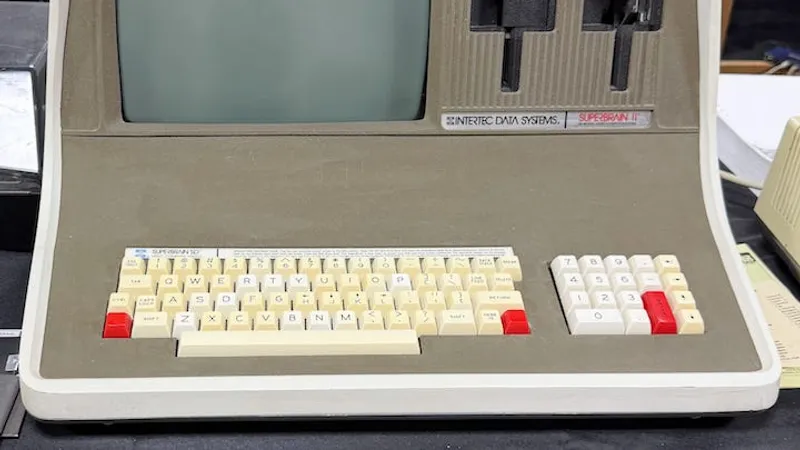
Over the past month or so I had the chance to visit two fantastic museums: the Large Scale Systems Museum (near Pittsburgh) and the National Museum of Toys and Miniatures (Kansas City). These museums showcase the twin histories of computing and play. These areas intersect explicitly when it comes to games, but also much more informally, as playfulness is something that has long been part of the world of computers and novel technologies are vital for opening up new avenues for toys. Or maybe I’m just trying too hard to make a connection between these two places and they simply are very much my jam and were fascinating to explore. Either way, I’ve included a very large number of my own photos from my visits below, along with some annotations of what I got to learn about and see.LSSM is a museum of computing history that is entirely volunteer-run and visits are by appointment only, which provides it both an exclusive and deeply enthusiastic feel when visiting it. And I’m pretty sure I first learned about it through a map I found online of places where you can see Cray supercomputers displayed publicly (by the way, for another experience, I highly recommend Marcin Wichary’s thread and photos from his recent visit to the museum as well).The first floor of the museum is mainframe and large-computer-focused, while the upstairs is full of early personal computers (the latest ones are of the BeBox and NeXT vintage). And I was in heaven. I had a fantastic guide who gave me a tour was excited to show me so many treats, from a personal computer that can play Pac-Man in ASCII to a vector monitor display that also involved—if I remember correctly—information from punch cards.There was even a computer created by Singer Business Machines, a division of Singer, the company that makes sewing machines. So much history and odd path-dependent contingency is bound up in that little fact!What else did I see?Well, there was the machine that inspired the look of the computers on Severance: There was the Three Rivers PERQ, which was developed in Pittsburgh and used ideas from Xerox PARC:Here is an abbreviated history of floppy disks in a single photo:Snoopy on a vector monitor, as well a short video of an animation on this kind of display:The Intel Personal SuperComputer, which is a fun and somewhat jarring name for a very large machine: A Cray (sadly, there wasn’t the one with the built-in seating on display):A copy of Ted Nelson’s Computer Lib/Dream Machines:A NeXTcube:And the Apple Lisa:A BeBox with some cool visuals and the “blinkenlights”:Here’s the Intertec SuperBrain II:Here is the same machine with Pac-Man in ASCII:And, finally, some fun logos and typography from these computing worlds:This museum also has a two-floor divide: the upper level is focused on the history of toys and games, while the first floor is focused on miniatures. What are miniatures? As a docent helpfully described it, the miniature is an art form with a specific set of rules that require making miniature objects that adhere to the properties of the original—materials, manufacturing processes, functionality—as closely as possible. If you see a miniature wooden cabinet, for example, it should be made the same way the full-size version was constructed, and all the drawers and cabinets are able to open and close, just like the original. The level of detail in these creations is unbelievable and humbling.Some miniature chairs:Miniatures of the kitchen:Here is an entire miniature room that mimics an architecture classroom studio:And here it is again, with a bit of the wall, to make it clear that this is not actually just a picture of a (regular-sized) room that I took!I don’t think you can type on this miniature typewriter, though I’d be very interested to learn the functionality and construction of this tiny machine:Now what of toys? The history of games and toys is really about how we have thought about play over the decades and centuries (and by the way, I also highly recommend the Strong National Museum of Play in Rochester for more of this kind of thing).But enough philosophy; here’s a sampling of what I saw.First, an old version of the Clue gameboard, which doesn’t really seem to have changed in its layout all that much (I think this might be a version from the 1960’s):Here’s the Magnavox Odyssey, an early home videogame system: A toy Geiger counter, though I think it was actually just a metal detector (and better than this toy!):And a stuffed “Nauga”:The toy Geiger counter also demonstrates how you can clearly see the way that our changing culture and technologies have influenced how we think about play. This included how companies marketed different toys and who they were aimed at over time, such as Meccano and its “Engineering for Boys”, as well as how new technologies were incorporated into gameplay, like in the The Sociable Telephone (a real phone was not actually used for the game):What does all this mean? Well, at the very least, our world’s history is really quite interesting. But the intertwining of technology, play, and society is also a great method for thinking about the world more broadly. And it’s also just a lot of fun. Please feel free to share your favorite museums in the comments. ■ShareI recently wrote an essay for Arc Magazine with Sara Wolkenfeld of Sefaria about the need for more incremental and less utopian thinking in the world of AI:Here are some links worth checking out that touch on the complex systems of our world (both built and natural):🜸 Reality Is Joking About U: “Uranium doesn’t glow green, except when it does, except this has nothing to do with why you mistakenly think it does”🝤 The Unsolved Mystery of Lorem Ipsum: This is great.🜚 “Descartes Against Humanity” and Other Games Designed by Famous Philosophers🝳 CrankGPTUntil next time.No posts
※ 著作権に配慮し、引用は冒頭3段落までです。続きは元記事をご覧ください。