错误架构:人类与人工智能代码的哲学探究
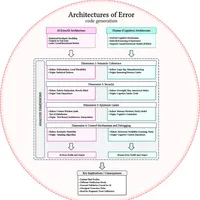
本文探讨了生成式人工智能 (GenAI) 在代码生成方面的应用,分析了人类和人工智能代码错误的根本差异。
研究发现,人类错误源于认知偏差,而人工智能错误则源于随机性。
文章借鉴了功能主义和实用主义的哲学思想,通过“抽象层次”框架理解错误维度在技术进步中的演变。
研究旨在为哲学家提供理解 GenAI 代码生成所面临的认知挑战的结构化框架,同时也为软件工程师提供更具批判性的参与依据。
文章还指出,即使是先进的模型在生成代码时也存在关键缺陷,并且温度(temperature,控制LLM输出随机性的参数)是一个重要的考量因素。
查看原文开头(英文 · 仅前 3 段)
AbstractWith the rise of generative AI (GenAI), Large Language Models are increasingly employed for code generation, becoming active co-authors alongside human programmers. Focusing specifically on this application domain, this paper articulates distinct “Architectures of Error” to ground an epistemic distinction between human and artificial code generation. Examined through their shared vulnerability to error, this distinction reveals fundamentally different causal origins: human-cognitive versus artificial-stochastic. To develop this framework and substantiate the distinction, the analysis draws critically upon Dennett’s mechanistic functionalism and Rescher’s methodological pragmatism. I argue that a systematic differentiation of these error profiles raises critical philosophical questions concerning semantic coherence, security robustness, epistemic limits, and control mechanisms in human-AI collaborative software development. The paper also utilizes Floridi’s Levels of Abstraction to provide a nuanced understanding of how these error dimensions interact and may evolve with technological advancements. This analysis aims to offer philosophers a structured framework for understanding code generation in the context of GenAI’s epistemological challenges, shaped by its architectural foundations, while also providing software engineers with a basis for more critically informed engagement.
Access this article
Log in via an institution
※ 出于版权考虑,仅引用前 3 段。完整内容请阅读原文。