生理电学
生理电学是一门研究生物细胞和组织电学特性的学科,通过测量电压变化或电流,或对离子通道蛋白到心脏等器官进行操作来研究生物组织的电活动。
它在神经科学中用于测量神经元的电活动,尤其是动作电位。
例如,脑电图(EEG)是一种重要的生理电学记录方法,常用于电生理诊断和监测。
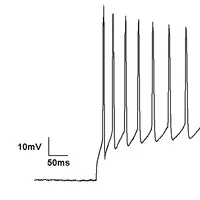
常用的技术包括“电流钳”技术,用于观察神经元因电流注入而放电的情况。
该领域涵盖了从单细胞到整个器官的多种尺度,并利用各种电极技术,包括玻璃微电极和表面电极等,以研究神经系统、肌肉等不同组织和器官的电活动。
查看原文开头(英文 · 仅前 3 段)
Electrophysiology (from Ancient Greek: ἤλεκτρον, romanized: ēlektron, lit. 'amber' [see the etymology of "electron"]; φύσις, physis, 'nature, origin'; and -λογία, -logia) is the branch of physiology that studies the electrical properties of biological cells and tissues. It involves measurements of voltage changes or electric current or manipulations on a wide variety of scales from single ion channel proteins to whole organs like the heart. In neuroscience, it includes measurements of the electrical activity of neurons, and, in particular, action potential activity. Recordings of large-scale electric signals from the nervous system, such as electroencephalography, may also be referred to as electrophysiological recordings.[1] They are useful for electrodiagnosis and monitoring.
"Current Clamp" is a common technique in electrophysiology. This is a whole-cell current clamp recording of a neuron firing due to its being depolarized by current injection
Definition and scope[edit]
※ 出于版权考虑,仅引用前 3 段。完整内容请阅读原文。