澳大利亚医疗首例挽救美国海军陆战队员的生命
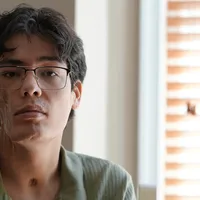
2023年8月,美国海军陆战队员特拉维斯·雷耶斯在澳大利亚参加军事演习时,乘坐的MV-22“鱼鹰”倾转旋翼飞机坠毁,导致三名机组人员丧生,但特拉维斯幸存。
由于伤势严重,他在墨尔本阿尔弗雷德医院接受治疗,包括使用体外膜肺氧合(ECMO)设备和进行首次应用到ECMO患者的加压氧舱治疗,以对抗致命的真菌感染。
这项突破性的医疗手段,加上他的妻子和家人的支持,最终帮助特拉维斯康复并成功返回美国,并创造了ECMO设备支持下的最长撤离飞行记录。
查看原文开头(英文 · 仅前 3 段)
In rural Maryland, USA, Travis Reyes savours the simple things. A cup of coffee on the deck with his wife. A walk in the nearby woods. All of it sweeter because, against all odds, somehow, he is still alive."I think most of it is stubbornness. A little too stubborn to die," Travis told 7.30. Travis was working in the cargo hold of the Osprey.(Supplied)In August 2023, Travis was a 20-year-old US Marine Corporal stationed in Darwin. He was part of the crew of a tilt-rotor MV-22 Osprey taking part in an Australian Defence Force-run exercise, Predators Run.On the morning of August 27, Travis's Osprey left Darwin but didn't make it to the landing zone on nearby Melville Island. The tilt-rotor crashed in the bush."Once we got closer to the island, I noticed that we were over-banked a little bit," Mr Reyes said."Then I grabbed onto the closest hydraulic Iines I could, which was connected to the ramp. And that was all I remember."Three Osprey crew members died, but 20 Marines on board — including Travis — survived. The Osprey crashed in the bush, killing three crew members.(Supplied: United States Marine Corps)Emergency physician Dr David McCreary from The Alfred Hospital in Melbourne was one of the first on the scene, as part of a helicopter-based team contracted to provide medical services for the exercise."We did a lap overhead of that kind of through and around the smoke and trying to see any sign of any survivors," Dr McCreary said"My first thought when I looked at it was there's no way anyone could have survived that." The Osprey crashed during a training exercise.(Supplied: United States Marine Corps) The crash was blamed on human error and a poor culture around following safety procedures.(Supplied: United States Marine Corps) Twenty Marines on board survived the Osprey crash.(Supplied: United States Marine Corps) Dr David McCreary had doubts that there would be survivors from the crash.(Supplied: United States Marine Corps)Dr McCreary was lowered by winch next to the crash site."[I] arrive at the scene and there's a couple of Marines around, there's some sitting up against trees and there's Travis lying on the ground," Dr McCreary told 7.30.More than two-and-a-half years later at home in Maryland, Travis still doesn't remember much. Travis remembers very little about what happened after the crash. (ABC News: Bradley Fulton)"I woke up on the ground surrounded by a bunch of people, it was very brief, and then I closed my eyes again," Travis recalled."And then I woke up two months later in Texas."Scalpels in the chestTravis's remarkable medical journey started in the Melville Island bush, just metres from the crash site.Dr McCreary was working to stabilise Travis so he could be transferred back to Darwin by helicopter. Dr David McCreary was one of the first to arrive at the scene of the crash. (ABC News: Dan Fermer)"During the proceedings his heart stopped and his breathing stopped," Dr McCreary told 7.30."So, we were able to do some lifesaving procedures. Then we put a scalpel in both sides of the chest."His heart started almost immediately after that."Travis's medical procedures were only just beginning. He had multiple broken bones. In Royal Darwin Hospital, his left lung and spleen were removed.A team from The Alfred Hospital in Melbourne arrived to put Travis on an Extra Corporeal Membrane Oxygenation or an ECMO machine. The machine works by providing vital life support that cleans and pumps oxygen into the blood when the body can't.Travis was then airlifted to Melbourne. He didn't know any of this. Travis was put on an ECMO machine and airlifted from Darwin to Melbourne for treatment.(Supplied: The Alfred)"It's crazy to think that you could be asleep for that long and miss out on all that, and so much is going on and you have no clue," he said. "It's a lot to think about."At The Alfred, Travis was the focus of an enormous medical effort to get him well enough to be transported back to the US.Dr Joseph Mathew was the Acting Director of Trauma Services when Travis arrived from Darwin. He was being treated with huge amounts of inotropic drugs to manage critical heart failure."The dosage was the highest I've seen in 30 years," Dr McCreary told 7.30. "He was very sick, and then he became even sicker."Potentially fatal and invasive fungal infection Jasmine Policarpio and Travis Reyes at a ball before the accident.(Supplied)With Travis's wife Jasmine Policarpio and his parents at the Alfred to support him, his condition took a potentially fatal turn. An invasive infection, known as Mucor, which comes from tropical fungi, spread to the bone on his face and down the neck, where major blood vessels supply blood to the brain."After hearing about the infection, that's when my optimism kind of went down," Jasmine told 7.30."I guess dealing with it at the time was just … so hard to manage." Travis's condition took another turn after he arrived at the Alfred. (Supplied)"When we found that fungal infection … especially in the face, there's limitation to what you can do, " Dr Mathew said.The medical team was told by Travis's family he wouldn't want treatment that would leave him partially paralysed. Another option to remove Travis's face and go ahead with a face transplant was also rejected.Dr Bridget Devaney was told despite several surgeries on Travis's face, the infection could not be stopped. Dr Bridget Devaney is a hyperbaric specialist.(ABC News: Dan Fermer)"All of his specialists … said this is not survivable anymore. The surgeons have said they can't take any more of his face," she told 730.Dr Devaney's medical specialty is hyperbaric chambers. They can adjust oxygen levels and atmospheric pressure to help cells heal.She knew that could help Travis, but no one on an ECMO machine had ever been treated in a hyperbaric chamber. Doctors believed manipulating oxygen levels in the hyperbaric chamber could help stop the infection. (Supplied: The Alfred)"It … had never been done before anywhere in the world. So, I somewhat tentatively sent a text message to our intensive care director at the time," she said."'What do you think about putting together a team to kind of explore this as a possibility for him?' And I think I finished off with 'crazy idea, yes or no'?"The Alfred doctors decided to give that crazy idea a shot after consulting Travis's wife Jasmine and his family. No one on an ECMO machine had ever been treated in a hyperbaric chamber prior to Travis. (Supplied: The Alfred)"He got 13 treatments over 15 days. Over the course of that time, the tissue just became healthier and healthier and started to granulate up," Dr Devaney said.Word spreads of world firstSince then at least two Alfred patients have had hyperbaric treatments similar to Travis. And word about this medical first has spread."We've had people reach out from all around the world to find out what we've done and how we've done it," Dr Devaney said."We've published three papers in the Journal of Diving and Hyperbaric Medicine about Travis, about the workflows and governance and how we did it safely. "Other people around the world are now starting to do some testing with ECMO in their chambers as well. So it's really exciting."After 38 days in The Alfred, Travis was ready for transport back to the US in a giant C 17 military transport. He was still on an ECMO machine. His trip to a US army hospital in Texas is the longest ECMO retrieval flight in history. After 38 days in The Alfred, Travis's recovery continued in the US.(Supplied) His trip to a US army hospital in Texas is the longest ECMO retrieval flight in history. (Supplied)Travis finally left hospital in Texas after eight months of intensive medical care. His wife Jasmine has been there through all of it."I fully believed that he would overcome it," she told 730. "(I felt) he's just going to beat everything, beat the odds. And he clearly did beat the odds." Travis continued his treatment for another seven months in the US. (Supplied)Travis has since left the US Marine Corps, and has now taken up competitive lifting, archery, and golf. His recovery has been remarkable and gratifying for The Alfred team that saved him.There are still challenges though. Travis is now legally blind, he has had a number of strokes and needs a brace on his left leg to walk.In late March he and Jasmine were virtually reunited in an online event with the many doctors and nurses at The Alfred who fought to keep Travis alive. For the former Marine, seeing the size of The Alfred medical team was an eye opener. Travis and his wife Jasmine were virtually reunited with the doctors and nurses at The Alfred who fought to keep him alive. (Supplied: The Alfred) Many in The Alfred team say they'll never forget Travis's recovery.(Supplied: The Alfred)"I was just in awe. I didn't realise how much actually went down logistically in my time in Australia," he told 7.30."It was just so awesome to meet all those people and see them and hear the stories."Many in The Alfred team say Travis's recovery is a case they will never forget."I think he's a champion. His family is terrific, I can personally assure you. So, I think it is overall a great outcome," Dr Mathew told 730. Dr Joseph Mathew was the Acting Director of Trauma Services when Travis arrived at The Alfred from Darwin.(ABC News: Dan Fermer)Both he and Jasmine hope to return to Melbourne in the future."We both definitely want to visit Australia soon, because especially after the reunion, he's more excited about meeting everybody and just really getting to give his gratitude face-to-face," Jasmine said. Travis and his wife Jasmine hope to visit Australia to say thank you in person to the team at The Alfred.(ABC News: Bradley Fulton)"I wish I could put into words how grateful I am," Travis said."I am just so grateful for them all."Watch 7.30, Mondays to Thursdays 7:30pm on ABC iview and ABC TV
※ 出于版权考虑,仅引用前 3 段。完整内容请阅读原文。